
Views: 25
Maritime transport is the great unknown of the global economy. However, it moves nearly 90% of world trade and is responsible for approximately 3% of global polluting emissions. This may seem like a modest figure, but in absolute terms, it is enormous.
The problem is that large ships use heavy fuels, which are highly polluting and difficult to replace. Therefore, any progress in this sector has a direct impact on the planet's sustainability.
In this context, the recent commitment of Hyundai Heavy Industries, one of the world's largest shipbuilders, marks a turning point: the unveiling of a large cargo ship capable of running on ammonia.
Ammonia (NH₃) is emerging as one of the most promising alternative fuels for maritime transport. The main reason is clear: it does not emit CO₂ during combustion.
This makes it a very attractive option for reducing emissions in the sector. Furthermore, it's a compound that has been known for decades, and some industrial infrastructure already exists for its production and storage.
However, it's not all advantages. It's a clean fuel… but demanding. Ammonia is toxic and corrosive, which requires a complete redesign of the storage, transport, and onboard usage systems.
This implies: advanced safety systems, corrosion-resistant materials, strict handling protocols, specific training for crews, etc …
Hyundai has addressed these challenges by developing a design that allows for safe operation with ammonia, while maintaining standards similar to current ones.
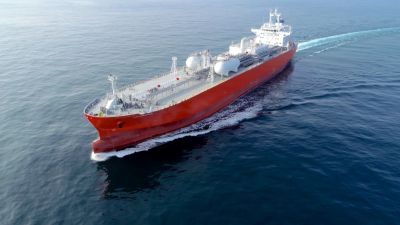
One of the most interesting aspects of the project is that the ship incorporates a dual-fuel system. This means it can operate on both ammonia and traditional fuels. This decision is not accidental. It allows for a gradual transition, reducing risks and facilitating adoption by shipping companies.
In a sector where investments are in the millions and margins are tight, introducing changes gradually is essential for innovation to be accepted. The fact that a company like Hyundai—the world's third-largest shipbuilder—is betting on ammonia is no small detail. It's a clear sign of where the market could be headed.
It's not the only alternative. Other companies are exploring hydrogen, methanol, and other options. But when a player of this size makes a technological decision, it usually accelerates the rest of the ecosystem: suppliers, shipowners, and regulators.
For ammonia to truly be a clean solution, it must be produced from renewable energy sources (what's known as "green ammonia"). Otherwise, we would simply be shifting emissions from one place to another.
Currently, much of the ammonia is produced using natural gas, which generates emissions. But this is changing rapidly thanks to the growth of renewable energy and the development of new sustainable production plants.
The first ammonia-powered cargo ship isn't the ultimate solution, but it is a significant milestone. It marks a clear path toward cleaner and more efficient shipping.
In the coming years, we'll see which technology ultimately prevails. Ammonia may take center stage, or it may coexist with other solutions. What is clear is that the change has already begun.
And in a sector as conservative as the maritime industry, that's an unmistakable sign that the transformation is real.
 EN
EN  ES
ES