
Views: 23
In recent years, Tesla has been synonymous with disruption. Under Elon Musk's leadership, the company has not only transformed the electric car industry, but now seems determined to redefine the future of work with a bold move: betting on the mass production of humanoid robots.
This strategic shift involves shifting away from prioritizing certain electric car models to free up industrial capacity and focus on developing the humanoid robot known as Tesla Optimus. The ambition is enormous: to build factories capable of producing up to one million robots per year, with the goal of scaling up to 10 million in the future. However, the big question is clear: is there really a market to absorb such a volume?
Humanoid robotics is currently experiencing a period of intense research and development. Companies like Boston Dynamics and Figure AI are demonstrating impressive advances in mobility and manipulation. However, these advances are still mostly in the experimental phase or in highly controlled environments.
The problem is clear: there is still no solid demand. Unlike traditional industrial robots—which have been optimizing processes in factories for decades—humanoids have not yet proven to be a cost-effective solution on a large scale.
The main argument in favor of humanoid robots is their design. Because they have a human form, they can be integrated into environments already designed for people: stairs, tools, workstations, etc. This avoids redesigning infrastructure, which in theory reduces barriers to adoption.
Furthermore, they could take over repetitive or dangerous tasks, freeing up human workers for higher value-added functions. In sectors such as logistics, manufacturing, or even caregiving, the potential is evident… at least on paper.
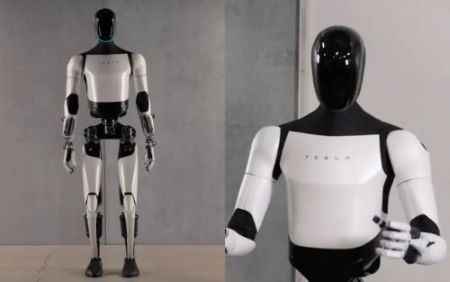
However, the drawbacks are significant. From an engineering perspective, moving on two legs is much less efficient than moving on wheels or simpler systems. This implies higher energy consumption, greater mechanical complexity, and more points of failure.
Added to this is a critical limitation: space. A humanoid robot has less capacity to house large batteries, which reduces its autonomy. And in an industrial environment, reliability and continuous operating time are key factors.
If we analyze the global robotics landscape, the figures call for caution. It is estimated that there are around 3 million robots in operation worldwide, including industrial and service robots:
China: ~1.8 million
United States: ~350,000
Europe: ~650,000
Rest of the world: ~200,000
These figures reflect decades of gradual and cautious investment. The industrial sector does not adopt new technologies impulsively; it carefully evaluates the return on investment, reliability, and operational integration.
In this context, proposing the sale of one million humanoid robots in the short term seems, at the very least, highly optimistic.
Tesla's strategy also includes strong vertical integration: designing and manufacturing even the inference chips these robots will use. This approach could be a long-term competitive advantage, but it also increases the risk if demand doesn't keep pace.
A visionary leap or a leap into the void? Musk may be seeing an opportunity that isn't yet apparent to the rest of the market. It wouldn't be the first time. But it's also true that the history of technology is full of bets ahead of their time… that took years or decades to find their place.
For now, the reality is that humanoid robots remain promising prototypes, far from mass adoption in factories or homes. Time will tell if this gamble redefines the industry or becomes an example of excessive technological optimism.
In the meantime, the debate is open.
 EN
EN  ES
ES