
Views: 27
Some business moves, at first glance, are perplexing. And Amazon's recent decision to acquire a small humanoid robot company is one of them. Not because robotics isn't important—it is, very much so—but because the chosen approach seems, at the very least, somewhat risky.
A few weeks ago, the acquisition of Fauna Robotics, a startup that had developed a small humanoid robot called Sprout, was announced. It's a device just over a meter tall and weighs about 25 kilos. It can move around, perform basic movements, and manipulate simple objects. Nothing spectacular… but functional.
The curious thing is that Amazon isn't starting from scratch in this field. The company already has more than a million robots operating in its logistics centers. But these robots are very different: they are designed for repetitive tasks, in controlled and highly optimized environments.
The home, on the other hand, is the complete opposite: unpredictable, ever-changing, and full of small challenges. Why a humanoid robot? That's the big question.
Humanoid robots have a clear advantage: they are designed to interact in environments designed for humans. Doors, furniture, objects… everything is adapted to our way of moving.
But they also have major drawbacks: they are more mechanically complex, consume more energy, are more expensive to manufacture and they have a higher risk of failure.
That's why many experts believe that robots with wheels are more practical for the home.
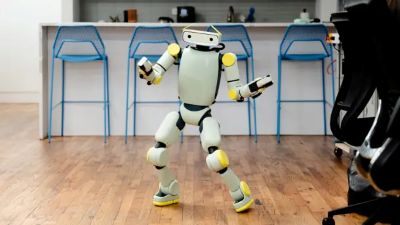
The Sprout robot doesn't seem to be intended as a final product, but rather as a development platform. And this is key, since it can be used by universities, research centers, or engineering teams to experiment with real-world applications: domestic assistance, help for the elderly, basic household tasks…
With this purchase, Amazon might be looking for exactly that: a starting point to accelerate innovation within the home.
Another interesting aspect is its size and weight. Being relatively lightweight, the risk in a home environment is lower. Furthermore, its modular design allows for the modification of components, such as arms or sensors, to adapt it to different uses. This opens the door to multiple applications… although many are yet to be discovered.
It's a long-term bet. It doesn't seem that Amazon expects to launch a mass-market domestic robot in the short term. These types of developments require years of testing, improvements, and adjustments.
But it does fit into a broader strategy: exploring new forms of automation beyond warehouses.
And here something important comes into play: the ability to take risks. Large technology companies have a clear advantage: they can afford to experiment. Not all their bets will pay off. In fact, many will fail. But if just one succeeds, it's enough to compensate for the rest.
From the outside, it might seem like a far-fetched idea. But from the inside, it's probably part of a larger plan.
To this day, humanoid robots in the home remain an enigma. Technically complex, expensive, and with still limited uses. But the history of technology is full of ideas that seemed unnecessary… until they weren't.
If Amazon gets it right, we'll be witnessing the beginning of a new product category. And if not, it will have been just another experiment, and they'll have learned something.
In any case, it's worth keeping a close eye on.
A video can be seen at: https://youtu.be/pO9MEqs7H2s
 EN
EN  ES
ES