
Views: 12
It often happens that when we access a website to perform some task, the system asks us to prove we're "human" through a simple test. The reason is very simple: nowadays, a large part of internet activity is carried out by bots.
According to some experts, around 60% of online interactions are generated by bots. These are automated computer systems capable of doing almost anything: sending false information, generating spam, carrying out phishing attacks, etc. These systems occupy much more of the internet than human users, and when we try to access certain platforms, they want to ensure that we are indeed legitimate users. Therefore, they subject us to a small test.
This test is known as CAPTCHA, an acronym for Completely Automated Public Turing test to tell Computers and Humans Apart. It began to be used in the early 2000s. These tests are very simple for humans, but more complex for computers, although artificial intelligence is helping the "bad guys" to circumvent them with increasing ease.
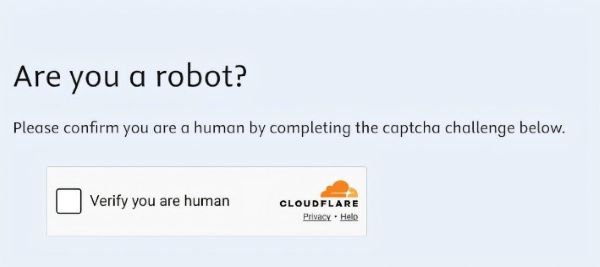
When we encounter one of these tests while browsing the internet, we should approach it patiently, since, in a way, the system is contributing to making our experience on that website a little safer.
It's true that, sometimes, they make us choose between several images—for example, those containing bicycles or ladders—and even repeat the process several times in a row. We have to be patient, as the system seeks to achieve a certain level of certainty that we are not a threat. It's an additional layer of protection.
The unfortunate thing is that what was taken for granted for decades—that users were people interacting with each other or with companies—has now become a complex environment where deception, lies, and, in general, attempts to harm others prevail.
But reality is what it is, and we should see these CAPTCHA systems as an aid to our security and not just as an annoying nuisance, even though they can sometimes be a bit tedious.
 EN
EN  ES
ES