
Views: 10
Solar and wind energy have a well-known Achilles' heel: they depend on the weather. When there is no sun or wind, generation drops, and the electrical grid is left without that input precisely when it needs it most. That's where backup systems come into play, and second-life batteries from electric cars are becoming key players in this story.
It's a problem that can be turned into an opportunity. After more than a decade of electric cars on the roads, there is now a flood of batteries removed from vehicles. A battery stops performing well enough to move a car when its capacity drops to approximately 65-80%, depending on the brand and usage, but it can still store a significant amount of usable energy.
These batteries have two paths: recycling to recover materials like lithium, cobalt, nickel, or copper, or living a second life as part of stationary storage systems that return energy to the grid when needed. Manufacturers like Renault, BMW, and Volkswagen already have active second-life programs for their batteries, a sign that the market is no longer a future promise, but a reality already underway.
Solar and wind energy don't always produce when we consume the most. On days with strong winds and sunshine, the electrical system experiences generation peaks that drive wholesale prices down, even below zero, and force the shutdown of power plants that don't depend on the weather. At the same time, the grid is strained by the rise of heat pumps and electric cars. Without an intermediate "storage" system to absorb this surplus and release it during peak hours, clean energy is wasted, and we remain dependent on gas.
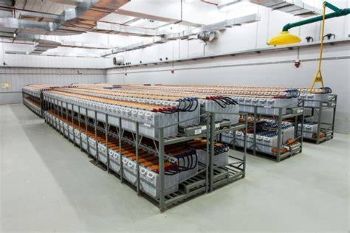
That's where the great value of second-life batteries lies: they act as an energy sponge that stores the surplus and releases it when the grid demands it. But there's a crucial distinction: not all used batteries are suitable for building a backup system. They must be selected based on their technology, their performance during charge and discharge cycles, and their actual health. They need a certain degree of uniformity to be interconnected and function as a single mega-battery capable of storing megawatts of power.
Furthermore, creating large-scale storage systems requires advanced infrastructure, including cooling systems, power electronics control, and battery management system (BMS) software capable of monitoring and optimizing performance in real time. Safety is also critical, as any failure could affect the entire electrical grid.
This selection process isn't for just anyone. Specialized companies are needed to guarantee that these batteries will operate reliably for years. Several companies, including the Munich-based German startup STABL Energy, are already transforming this challenge into a cost-effective solution thanks to inverter technology that allows for the safe and efficient reuse of used vehicle batteries as large-scale stationary energy storage systems. And there are many more like this in China.
Everything points to this being a long-term business, but not for just anyone. Participating in the management of the electrical grid is one of the most delicate tasks there is, because there is no room for error that could leave entire cities in the dark. We have already seen examples of this, and they cannot be repeated.
Reusing electric car batteries as grid backup is not simply a matter of stacking used cells. It involves engineering, quality control, and expert management all working toward a greater goal: a more stable, more sustainable electrical grid that is less dependent on fossil fuels.
It is a sector with a long future ahead, and those who know how to position themselves within it will be participating in one of the great energy transformations of the coming decades.
 EN
EN  ES
ES