
Views: 22
Can you imagine boarding a plane—or sending cargo—knowing there's no one in the cockpit? What until recently seemed like science fiction is getting closer to becoming a reality. And a Californian company called Reliable Robotics has been working quietly for years to make it possible.
A startup with great ambition. Founded in 2017 in Mountain View, California, Reliable Robotics has designed its system to work on any type of aircraft, in any airspace, directly addressing the most common causes of aviation incidents. Not bad for a company less than ten years old.
Its flagship product is called RAS (Reliable Autonomy System), and its purpose is ambitious but clear: to completely automate an aircraft's flight, from taxiing to landing, without direct human intervention.
What does RAS do? The system allows an aircraft to operate without pilots in every phase of flight: taxiing, takeoff, cruise, and landing. It sounds like technical jargon, but consider what it entails: the system has to interpret the environment, communicate with air traffic control, avoid obstacles, and make decisions in real time.
What's especially relevant is its approach: the certification plan is based on existing regulations for standard and transport category aircraft, without requiring special conditions or exemptions. In other words, RAS doesn't ask for new rules to be invented. It adapts to the existing ones. This greatly accelerates its path to market.
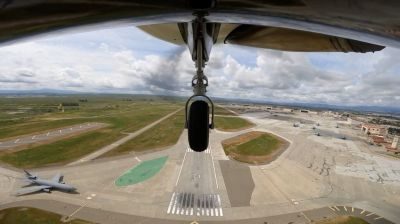
Reliable Robotics' credibility isn't based solely on promises. The FAA formally accepted its certification plan in July 2023, positioning the company to become the first to certify an autonomous flight system under current aviation regulations.
In addition, there is active collaboration with NASA to conduct test flights at real airports, and a contract with the U.S. Air Force to integrate the RAS into a Cessna 208B Caravan, with the goal of improving logistics operations in the Indo-Pacific.
CEO Robert Rose has indicated that the goal is to achieve full FAA certification by 2028. This has attracted investors. And when investors make significant investments, it's usually because they see something real.
Reliable Robotics has announced $160 million in new funding to accelerate the deployment and large-scale production of the RAS, building on previous commitments for more than 200 systems from commercial and military customers.
New investors include names like Boeing (through AE Ventures) and RTX Ventures, which speaks volumes about the confidence of the more traditional aerospace sector in this technology.
Are we close to the pilotless plane? No, autonomous aviation won't arrive overnight. The first real-world scenario could be cargo planes, where the absence of passengers facilitates regulatory approval and reduces social resistance. Beyond defense, Reliable plans to operate its own cargo airline under Part 135 regulations, using retrofitted aircraft to compete in the same-day or next-day delivery market.
The leap to passenger flights will come later, with more data, more testing, and more accumulated confidence. But the direction is set. What Reliable Robotics is building today is, in essence, the first chapter of a story that will rewrite air transport as we know it.
You can see the company's website at: https://reliable.co/
And a video at: https://www.youtube.com/watch?v=2gNQcSlcMFo
I hope they do well, because we'll all benefit, but I still have a big question. If an airplane with an automated system and no pilot has an accident, who is responsible?
 EN
EN  ES
ES