
Views: 5
Every year we witness the same ritual. Major manufacturers unveil their new mobile phones with massive marketing campaigns promising revolutionary cameras, faster processors, or new artificial intelligence features. The message is clear: it's time to change your phone. But is it really necessary?
If we analyze the evolution of smartphones in recent years, the answer is usually no. Mobile technology has reached a very high level of maturity. Today, even a mid-range phone offers more than enough performance for the vast majority of users: browsing the internet, using social media, taking photos, watching videos, working, or making mobile payments.
The improvements between generations are getting smaller and smaller. For example, just compare the Google Pixel 10, released in 2015, with the new Pixel 11. The most significant differences lie in the processor, memory, and some artificial intelligence features, while the remaining changes are largely irrelevant to the average user. In daily use, many people would barely notice any difference. And the same thing happens with other brands.
This phenomenon isn't unique to Google. It happens with practically every brand. Each new model incorporates small improvements, but rarely represents a technological leap comparable to what we experienced a decade ago.
Furthermore, there's another aspect worth considering: price. High-end phones with screens larger than six inches easily exceed the price of many modern 55-inch televisions. They are obviously different products, but it's striking that a television can last ten years or more, while many users replace their phones approximately every three years.
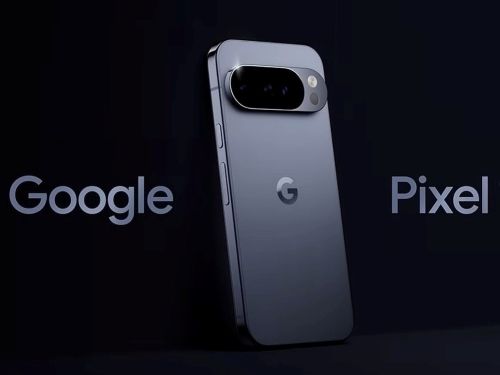
Fortunately, this trend seems to be starting to change. One of the most important factors is that manufacturers are offering increasingly longer software updates. Google and Samsung, for example, already guarantee up to seven years of updates on many of their most recent models, which extends both the security and the lifespan of the device.
In addition, current hardware ages much better than it did a few years ago. A modern processor maintains excellent performance for a long time, especially for those who don't use extremely demanding applications or cutting-edge video games.
So, when is it really worth upgrading your phone? The answer depends on how you use it, but for most users, it's perfectly reasonable to keep their phone for five to six years, as long as it continues to receive security updates and functions properly.
There would only be clear reasons to upgrade sooner if the device has significant malfunctions, the battery no longer offers acceptable battery life, it stops receiving security support, or your needs have changed significantly.
In reality, upgrading your phone before that timeframe is usually driven more by the desire to have the latest technology than by a genuine need. And it's precisely this desire that fuels manufacturers' marketing campaigns, whose logical objective is to sell more devices.
The next time a new model appears, perhaps the question shouldn't be "What's new about it?" but rather "Do I really need to upgrade the one I already have?" In many cases, the answer will be surprisingly simple: probably not.
 EN
EN  ES
ES