
Views: 13
Just a decade ago, Uber dreamed of developing its own self-driving cars. Back in 2016, the company invested billions of dollars in creating a technology that promised to revolutionize transportation. However, technical problems, several accidents during testing, and the enormous cost of the project ultimately forced the company to change course.
Far from abandoning the sector, Uber made a much more pragmatic decision: to stop manufacturing the technology and become the best platform for others to use it. And, judging by what's happening, it seems like a very smart strategy.
Developing a fully autonomous vehicle is one of the most complex technological tasks that exist today. It requires enormous investments, years of development, millions of kilometers of testing, and overcoming demanding regulatory processes. Uber knows this perfectly well because it has already travelled that road and experienced firsthand how difficult it is.
That's why it decided to focus on what it does best: connecting passengers with vehicles.
Over the past few years, the company has signed agreements with virtually all the major robotaxi developers in the world. These include Waymo, Baidu, Lucid, Motional, Pony.ai, WeRide, Volkswagen, Rivian, Nissan, Mercedes-Benz, and many other companies, now exceeding twenty strategic partners. Uber has also invested in some of these companies to participate in their growth.
The philosophy is simple: it doesn't matter who builds the best autonomous car, as long as users can request it through the Uber app. And that is precisely the company's greatest asset.
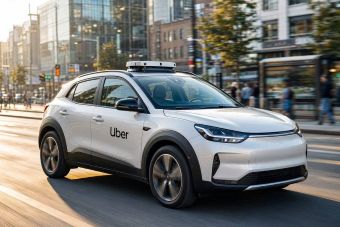
Uber has one of the largest mobility platforms on the planet, with around 200 million active users each month. No autonomous vehicle manufacturer has a similar customer base on its own. For many technology companies, it is much more efficient to integrate into Uber's network than to try to create a global transportation service from scratch.
The strategy isn't limited to car manufacturers. Uber also maintains a close collaboration with Nvidia, whose hardware and artificial intelligence platforms are becoming a benchmark for numerous autonomous driving developers. In this way, Uber contributes to creating an ecosystem where different companies can share the same technological infrastructure without depending on a single manufacturer.
Naturally, the future is still quite open. Some alliances will evolve, others will disappear, and new partners will emerge as the technology matures. In fact, Uber has already modified some initial agreements while incorporating new manufacturers into its platform, demonstrating great flexibility in adapting to a rapidly changing market.
What's truly interesting is that Uber no longer needs to predict which company will win the technological race. If several manufacturers manage to develop competitive robotaxis, they can all become suppliers for the platform.
It's a smart way to diversify risk. While others compete to build the best autonomous vehicle, Uber is working to become the central hub connecting these vehicles with millions of travelers worldwide.
The strategy seems sensible and highly pragmatic. The company remains at the forefront of the autonomous driving revolution without incurring the enormous cost of developing all the technology on its own.
Now, all that remains is to wait for robotaxis to reach commercial maturity. If that moment arrives in the coming years, Uber will likely have positioned itself to lead the autonomous mobility of the future.
Time will tell.
 EN
EN  ES
ES