
Views: 11
Nuclear energy is once again at the center of the global energy debate. This time, the protagonist is Antares, a US company specializing in the development of nuclear microreactors, which has just achieved a significant technological milestone: the criticality of its Mark-0 experimental reactor.
But what does achieving criticality really mean? In simple terms, it means that the reactor has managed to maintain a self-sustaining nuclear reaction. That is, nuclear fission continues on its own without the need for external inputs. This is an essential step for any reactor that aspires to one day generate electricity.
It is important to clarify that this achievement does not yet mean that the reactor is producing electrical energy. In fact, the test performed corresponds to a "zero-power criticality" demonstration, designed to validate calculations, control systems, and physical models of the reactor.
Antares's focus is on compact reactors capable of producing between 100 kW and 1 MW of power. Its primary initial market would be military installations, remote bases, and isolated locations where a reliable energy source is essential.
The company expects to have a prototype capable of generating electricity by 2027 and to achieve operational deployments starting in 2028. If it meets these deadlines, it could become one of the pioneering companies in a new generation of modular and transportable nuclear reactors.
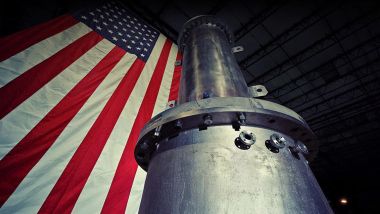
This progress is not by chance. The US administration has made the development of advanced nuclear energy one of its strategic priorities. Both fission and future nuclear fusion receive institutional support, funding, and streamlined administrative procedures to accelerate their development.
The objective is twofold: to strengthen the country's energy independence and to have new sources of electricity capable of powering everything from data centers to critical military installations.
As is often the case with emerging technologies, not everyone shares the same enthusiasm. Among the more cautious voices is Edwin Lyman (Director of Nuclear Energy Safety at the Union of Concerned Scientists), who points out that achieving criticality does not automatically guarantee the project's commercial success, nor does it yet demonstrate its large-scale economic viability.
And he's right. The history of technology is full of promising prototypes that never managed to gain traction in the market, but this is an advance that deserves attention.
Therefore, Antares' achievement represents a significant step for the U.S. nuclear sector. Reaching criticality is tangible proof that the reactor is functioning as intended and allows progress toward more demanding phases of development.
If, within two years, these microreactors truly begin to reliably produce electricity, we could be witnessing the birth of a new category of energy generation. For now, the news inspires cautious optimism: the experiment has worked, but the real test will come when it has to demonstrate its usefulness under real-world conditions.
We will find out soon.
 EN
EN  ES
ES