
Views: 8
Just five years ago, the commercial aviation industry launched a message that sounded hopeful. Airlines, manufacturers, airports, and international organizations committed to achieving net-zero emissions by 2050, the well-known Net Zero target.
The promise seemed clear: 65% of the emissions reduction would come from the widespread use of sustainable aviation fuels, known as SAF (Sustainable Aviation Fuel), while the remainder would be offset through international emissions trading programs and other mitigation measures. However, reality has begun to dismantle that optimism.
At the IATA annual meeting recently held in Rio de Janeiro, its Director-General, Willie Walsh, publicly acknowledged that the path to the 2050 target is becoming seriously complicated. According to data presented by the organization itself, meeting climate commitments would require approximately 500 million tons of SAF (Sustainable Aviation Fuel) by 2050. However, global production projected for this year will barely reach 2.4 million tons, representing only 0.8% of the fuel used by commercial aviation.
The gap between what is needed and what is actually available is enormous. Walsh has pointed the finger at governments, energy producers, and other actors in the supply chain for not having sufficiently promoted the production of sustainable fuels. In a way, he is saying that many of the commitments announced a few years ago have remained mere declarations of good intentions.
But the underlying issue is more troubling.
Was it really realistic to think that the world would be able to produce such a quantity of sustainable fuel while air traffic continues to grow year after year? Many experts have long warned that the availability of raw materials, the necessary investments, and production costs make achieving these figures extremely difficult.
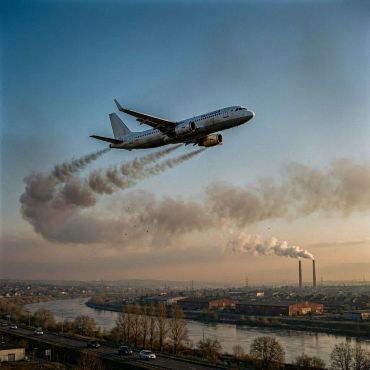
Furthermore, SAF remains significantly more expensive than conventional kerosene, limiting its expansion and forcing it to rely on public subsidies and government incentives to drive its development.
Aviation plays a vital role in the global economy. It facilitates international trade, connects territories, and generates millions of jobs. No one disputes this fact.
However, it is also true that a large proportion of current flights are for leisure and tourism. These are trips that generate immediate economic benefits but have a considerable environmental impact.
Herein lies a contradiction that is rarely addressed clearly: we pursue continued growth in air transport while simultaneously trying to drastically reduce its emissions. These two goals can be incompatible if technology does not advance at the necessary pace.
This is why a growing number of voices believe that sustainable fuels have been used, at least in part, as a tool to reassure consumers and investors—a practice known as “greenwashing.” This is a way of conveying the feeling that a technological solution is just around the corner, when in reality, such a solution is still far from being deployed on a large scale.
What is most striking is that now, barely five years after announcing those ambitious goals, some of the very organizations that promoted them acknowledge that they were probably not as realistic as they seemed.
Meanwhile, the planet continues to send unequivocal signals. Heat waves are becoming more frequent, temperature records continue to fall, and atmospheric CO₂ concentrations continue to rise.
The climate crisis doesn't adhere to political timetables or corporate strategies. However, many important decisions continue to be postponed because they involve short-term economic or electoral costs.
Perhaps the main lesson of this situation is that climate goals must be accompanied by realistic plans, concrete investments, and rigorous monitoring mechanisms. Otherwise, we risk turning grand promises into mere communication exercises.
And time, precisely, is the resource we have the least of.
 EN
EN  ES
ES