
Views: 17
Changing car tires is one of those maintenance tasks that all drivers are familiar with. Tires wear out with use, and sooner or later, it's time to go to the workshop to replace them with new ones. Until now, this work has been done almost entirely by hand: removing each wheel individually, taking off the old tire, putting on the new one, and checking the pressure. A manual process that millions of workshops have been doing for decades with the help of relatively simple machinery.
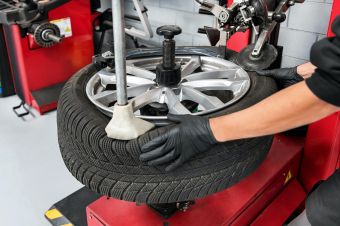
However, automation has also arrived in this sector. I recently saw a robotic system capable of changing all four tires on a car simultaneously and automatically. The operator barely intervenes during the process and only has to take care of the final inflation of the tires once the operation is complete.
The result is surprising. The entire four-tire change, including the pressure check, can be done in just three minutes. A timeframe unthinkable just a few years ago, demonstrating the extent to which industrial technology continues to evolve.
A video can be viewed at: https://www.youtube.com/watch?v=bqePUb3PUwg
Beyond mere technological curiosity, these solutions represent something far more significant: the growing capacity of automated and robotic systems to execute complex tasks with remarkable precision. What once required manual expertise and time can now be accomplished through sensors, robotic arms, machine vision, and applied artificial intelligence.
And AI is precisely the next major leap forward. New industrial systems no longer simply execute programmed movements; they are beginning to incorporate learning capabilities. This allows for optimized processing times, error detection, adaptation to different vehicle models, and even the anticipation of mechanical failures before they occur.
The automotive industry has been investing in automation on assembly lines for years, but now we are seeing this technological revolution arrive in maintenance and repair shops as well.
However, a reasonable question arises: Is such an installation profitable? This is probably only the case in centers with a very high volume of daily work. The cost of acquiring and maintaining these machines is considerable, and to recoup the investment, hundreds or thousands of tires would need to be changed every month.
Even so, the general observation remains very valid. We are entering a stage where advanced automation will no longer be limited to large factories and will begin to be integrated into everyday services. We will see it in workshops, warehouses, hospitals, supermarkets, and practically any repetitive activity.
Technology doesn't stand still. And, as is often the case, the most interesting thing is not just what these machines are already doing today, but everything they will be capable of doing tomorrow.
 EN
EN  ES
ES