
Views: 5
Espresso is one of the most consumed beverages on the planet. It is estimated that more than 1 billion espressos are prepared every day worldwide. Since the late 19th century, specifically since the 1880s, the process has changed very little: hot water at high pressure passes through ground coffee to extract its aromas, flavors, and most prized characteristics.
For more than a hundred years, this technique has proven effective and has won over homes, cafes, and restaurants on every continent. However, a recent innovation could open the door to a new way of preparing this popular beverage, significantly reducing energy consumption without sacrificing the consumer experience.
The proposal is as simple as it is surprising. Instead of using hot water, the new system uses room-temperature water combined with ultrasonic technology. These ultrasound waves are high-frequency sound waves that are outside the range of human hearing, but they can generate very useful physical effects in certain industrial and food processes.
The key to the method lies in the treatment the ground coffee beans receive. They are placed in a specially designed filter that incorporates an ultrasound system. When water passes through the coffee, the sound waves promote the extraction of the compounds responsible for the flavor, aroma, and body of the beverage, achieving results very similar to those obtained through the traditional hot water pressurization process.
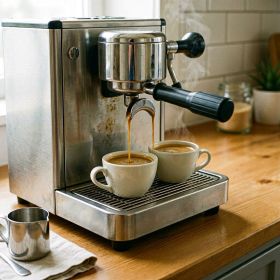
One of the most interesting aspects of this innovation is its energy efficiency. According to data released by its developers, the system can reduce the energy consumption needed to prepare an espresso by up to 75%. This figure could have a particularly significant impact on businesses that produce hundreds or even thousands of coffees every day, such as coffee shops, hotels, airports, or large restaurant chains.
Naturally, the big question was whether consumers would notice the difference. To answer this question, blind taste tests were conducted in which participants sampled coffees prepared using both methods. The result was particularly promising: most people were unable to distinguish which coffee had been prepared using the traditional method and which using ultrasound.
This point is probably the most important factor for the technology's commercial success. After all, consumers want to enjoy the same aroma, flavor, and experience they expect from a good espresso. If, in addition, that experience can be achieved with lower energy costs, the chances of adoption increase considerably.
Those who wish to learn more about how this innovation works can see a demonstration in the following video:
Beyond the coffee itself, this news leaves us with a very interesting point to consider. We often think that innovation only appears in entirely new sectors, but reality proves otherwise. Even century-old processes, perfected over generations, can benefit from new perspectives and existing technologies.
Personally, I find it especially inspiring that something as commonplace as making coffee can be reinvented thanks to human creativity. It's further proof of how science and technology continue to find opportunities for improvement in activities that once seemed immutable.
We'll have to wait and see if this patent manages to gain traction in the market, but the concept is promising. If it succeeds in maintaining the quality of traditional espresso while reducing energy consumption, it could become one of the most exciting advancements in the coffee industry in the coming years.
My best wishes to the inventors. I hope this innovation finds its niche and contributes to a more efficient and sustainable future, without sacrificing the pleasure of enjoying a good cup of coffee.
 EN
EN  ES
ES