
Views: 18
Artificial intelligence (AI) is no longer just for data centers or digital applications. It's making the definitive leap into the physical world, and that's where NVIDIA comes in, one of the companies best positioned to lead this transformation. Its strategy is clear: to bring its expertise in AI hardware and software to the growing world of robots.
Currently, it's estimated that there are more than 2 million robots installed worldwide, primarily in industrial environments. However, most of these machines still operate with traditional, limited, and inflexible programming. This is where AI can make a radical difference: enabling robots to learn, adapt, and optimize their performance in real time.
Until now, NVIDIA's business has relied heavily on data centers, where its GPUs are key to training AI models. But the company has understood something crucial: if AI expands to robots, autonomous cars, and smart devices in general, its potential market multiplies.
The strategy is simple yet powerful: offer a complete ecosystem that combines high-performance hardware with advanced software. It's not just about selling chips, but about providing a comprehensive platform that allows for the rapid and efficient design, simulation, and deployment of AI-based solutions.
Simulation can be the great accelerator of robotics. One of the biggest challenges in robotics is the time and cost involved in moving from design to real-world implementation. NVIDIA addresses this problem with advanced simulation tools that allow robots to "learn" in virtual environments before operating in the real world.
With platforms like NVIDIA Isaac, among others, companies can recreate entire factories, test complex scenarios, and train AI models without risk. This drastically reduces development time and improves the accuracy of systems.
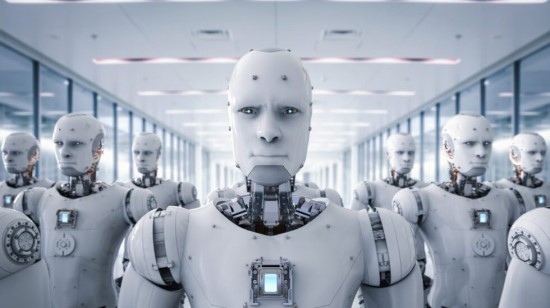
This is a key boost for robot manufacturers. Leading companies like KUKA, ABB Robotics, FANUC, and others benefit directly from this approach. Traditionally, these manufacturers developed much of their technology in-house. However, integrating NVIDIA solutions allows them to gain agility and focus on innovating their own products.
The added value is clear: a reliable, secure, and scalable environment for designing and testing solutions. In an increasingly competitive market, this ability to adapt quickly can make all the difference.
Beyond robotics, this concept can be applied to autonomous vehicles and intelligent systems in general. Companies developing smart cars also need to simulate millions of kilometers before putting a vehicle on the road.
NVIDIA already plays a significant role in this area, providing both the hardware and software necessary to train autonomous driving systems. This reinforces its position as a comprehensive provider of AI solutions for the physical world.
One of NVIDIA's greatest strengths is offering a fairly closed yet highly integrated ecosystem. This strategy, similar to the one it already dominates in data centers, allows it to control the entire value chain: from the chip to the final application. And it offers this to all types of companies, large and small.
The expansion of AI into robotics is not a future possibility, but an ongoing reality. For now, it seems that NVIDIA has been able to anticipate this and position itself as a key player in this paradigm shift.
Its combination of powerful hardware, advanced software, and simulation environments is accelerating the adoption of intelligent robots in multiple industries. And if this trend continues, it will not only transform how products are manufactured, but also how we interact with machines in our daily lives.
However, the technology market is dynamic. When a company demonstrates that a model works and generates revenue, other companies are quick to follow suit. We will likely see new competitors trying to replicate this approach in the coming years.
 EN
EN  ES
ES