
Views: 17
Flying has always been humanity's great dream, but today that dream faces an urgent, ground-based challenge: decarbonization. While electric cars are already commonplace on our streets, "electrifying" the skies is a monumental task. However, a new technological milestone born in Europe could help change the game.
Aeronautics is probably the most difficult sector to clean up. The problem is energy density: current batteries weigh too much for how little they perform compared to kerosene. Therefore, the larger the aircraft and the longer the distance, the more difficult the equation becomes. Nevertheless, the current strategy is clear: start with small aircraft and short routes to gradually conquer the skies.
In this context, the AMBER project emerges, a European Union initiative seeking disruptive solutions for climate-neutral aviation. The goal is ambitious: to reduce emissions by 30% in the short term through the use of hydrogen fuel cells and hybrid turbines.
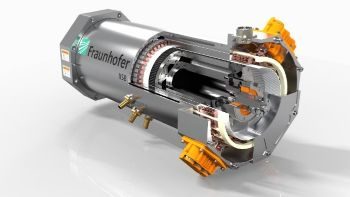
The big news comes from the Fraunhofer Institute, which has just unveiled an engineering marvel: an electric motor that seems to defy the laws of aeronautical logic. Extreme power in just 94 kg.
What makes this motor special is not only that it's electric, but its incredible design efficiency. Here are its credentials:
. Amazing lightness: It weighs only 94 kg, but is capable of delivering 1,000 HP (horsepower).
. Power-to-weight ratio: It offers 8 kW per kilogram. To give you an idea, this is three times more power than the motor of a conventional electric car.
. High revolutions: It can spin at more than 20,000 rpm, allowing it to drive propellers or turbines in medium-sized aircraft.
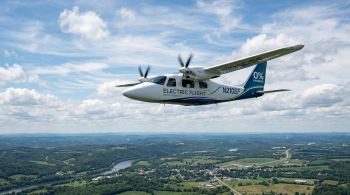
One of the biggest enemies of electric motors is heat. To prevent the motor from "melting" while operating at full power, engineers have designed a direct oil spray cooling system. This allows for maintaining an optimal temperature even during critical phases of flight, such as takeoff.
This motor is extremely versatile. It can be powered by hydrogen fuel cells, making it a key component for short-haul regional aircraft or as part of hybrid systems in larger planes.
Sustainable aviation won't arrive all at once, but through milestones like this. We are facing a technological puzzle where every piece—lightweight motors, synthetic fuels, and hydrogen—counts.
Currently, prototypes are already being prepared for real-world test flights. If the predictions are correct, in just a few years we will see these quiet and clean motors begin to cover commercial routes. The road is long, but with ingenuity and technology, the sky is getting closer and closer to truly being blue.
I hope I'm not wrong.
 EN
EN  ES
ES