
Views: 14
For decades, short sea shipping has barely changed. Thousands of small and medium-sized vessels continue to move passengers and goods between nearby ports using diesel or kerosene. However, the energy transition is also reaching the sea, and one of the most promising technologies is the electric hydrofoil ferry.
The idea is not new. Hydrofoil technology has existed for over 100 years. Its operation is similar to that of an airplane's wings: submerged "wings" lift the ship's hull above the water when it reaches a certain speed. By drastically reducing contact with the water, resistance and energy consumption are greatly reduced.
Today, thanks to modern batteries, electronic control systems, and high-efficiency electric motors, this technology is experiencing a true renaissance.
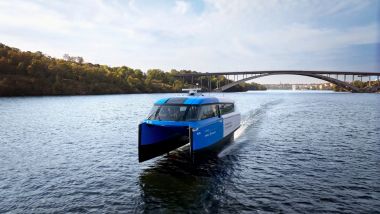
One of the well-known companies in this sector is the Swedish firm Candela, which already manufactures electric hydrofoil ferries for short journeys between coastal cities and island areas. Their vessels are beginning operations in countries such as Sweden, New Zealand, and Thailand, demonstrating that this technology is no longer science fiction.
You can see their website at: https://candela.com/es/about-us/
The data is truly remarkable. According to the company itself, their boats can reduce energy consumption by up to 80% compared to a conventional vessel of the same size.
The key lies in the fact that the hull practically "flies" over the water. This not only saves energy but also reduces noise, vibrations, and waves. It even improves passenger comfort, especially on quick trips between nearby ports.
Another interesting aspect is the charging system. On many routes, the batteries can be quickly recharged in ports using standard fast chargers. In some cases, battery swapping is also being studied, a relatively simple process that can be completed in just a few minutes.
The Candela P-12 electric hydrofoil ferry even recently completed one of the longest electric maritime voyages ever undertaken by a passenger vessel, covering some 160 nautical miles between Sweden and Norway.
Of course, this technology alone will not solve the enormous problem of emissions from global shipping. Large ocean-going vessels remain a much more complex challenge. But it can be of enormous help on regional, tourist, or urban routes, where distances are relatively short and routes are well-defined.
Every small step counts. Decarbonizing transport requires multiple solutions working simultaneously: electric cars, more efficient trains, renewable energy, sustainable aviation, and also electric ships on short journeys.
Time is running out, and the climate challenge is immense. But initiatives like electric hydrofoil ferries demonstrate that innovation can transform even sectors as traditional as maritime shipping.
In the end, every little bit helps.
 EN
EN  ES
ES