
Views: 12
A few decades ago, owning a new car was the absolute synonym for freedom. Turning the key, starting the engine, and getting lost on the open road meant disconnecting from the world. Today, that romantic feeling has completely changed. You still have the freedom to go wherever you want, but privacy inside your own vehicle is practically nonexistent.
Modern cars are no longer just mechanical machines; they are veritable computers on wheels, permanently connected to the Internet. A gold mine on four wheels.
Every time you get into a modern vehicle, countless internal and external sensors are activated. Automakers have learned from the tech giants and mobile app developers. Their goal? To extract every last byte of information to make it profitable.
A modern car is capable of capturing even more data than your own mobile phone. It knows exactly: your exact location and the routes you frequent, how fast you drive and how you brake, your level of attention behind the wheel through internal cameras, the music or podcasts you listen to every day… and the list goes on.
The new business model: Just like with free apps on our smartphones, the real business is no longer just selling you the product (the car), but trading in the data you generate every second.
This is the worst nightmare for your privacy. This ecosystem of mass surveillance is not an exaggeration. In 2023, the prestigious Mozilla Foundation conducted a comprehensive study on privacy in 25 of the leading car brands on the market. The conclusions were devastating: automobiles were crowned "the worst product category ever analyzed in terms of privacy."
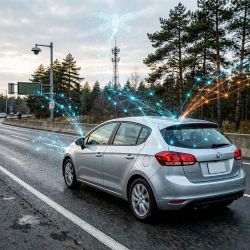
Since then, the situation has only intensified. Over-the-air software updates and the arrival of artificial intelligence in dashboards allow for even more efficient and personalized data collection.
And how do brands get our consent? Very easily: through the classic "digital fatigue." They present us with endless contracts full of fine print that we blindly accept in order to link our phone or activate the navigation system.
The data broker market is experiencing a golden age. Your driving history is of great interest to very powerful sectors. Insurance companies, for example, crave this information to adjust (or increase) premiums based on your driving habits.
If you brake suddenly or exceed the speed limit on a secondary road, your car will record it, and that information could end up in the hands of third parties. In many countries, the profits that automakers project to obtain by selling this data will soon exceed the margins from the sale of the vehicle itself.
The current landscape is complex, and until there is strict global legislation, the trend will only worsen. We need clear regulations that establish that we are the sole owners of our data. The consent process for sharing information must be explicit, simple, and transparent, not a hundred-page legal labyrinth.
While laws are catching up with technology, the next time you get in your car and the touchscreen lights up, remember that you're not traveling alone. Hopefully, the future will give us back the true freedom of the open road, but for now, your car knows far too much about you.
 EN
EN  ES
ES