
Views: 21
Some companies aren't content with simply dominating a sector. Amazon is one of them, and it continues to prove it. The e-commerce giant has just taken a step that has shaken the logistics world: opening its powerful distribution network to any company that wants to use it.
The service is called Amazon Supply Chain Services (ASCS), and although it sounds technical, the idea is simple: what Amazon built to ship its own products is now available to other companies, to anyone who needs to move merchandise.
For years, Amazon has invested billions in logistics centers, delivery fleets, warehousing technology, and global distribution routes. The result is one of the most efficient infrastructures on the planet.
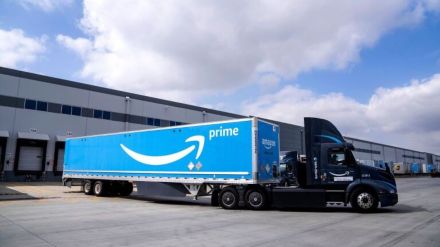
And now, instead of that logistical muscle working only for Amazon, the company is putting it at the service of the market. ASCS offers warehousing in its centers, inventory management, shipping by land, air, and even sea, and deliveries to the end customer.
The service targets sectors such as healthcare, automotive, manufacturing, and retail, positioning Amazon as a direct competitor to large traditional logistics operators like UPS, DHL, etc.
This is similar to what Amazon did years ago with its technological infrastructure. First, it built servers and cloud capacity for its own use, and then opened them up to the market. Today, Amazon Web Services (AWS) is one of the world leaders in cloud computing. The parallel with ASCS is unavoidable, and many analysts are already pointing it out.
Large companies like 3M have been among the first to join the service. And everything indicates that the list will grow if the delivery times and costs prove competitive.
The market reaction has left no doubt about the impact of this move. UPS and FedEx shares fell more than 9% after the announcement, while other companies also registered declines.
The most coveted segment is B2B—business-to-business shipments—a high-margin market where deliveries are denser, more predictable, and more profitable than shipments to the end consumer.
However, experts warn that Amazon won't have it easy. Companies with established physical assets and long-standing business relationships will remain competitive; the greatest risk lies with leaner logistics operators, those without their own infrastructure.
Amazon has the infrastructure, the technology, and the financial muscle. But logistics is also about trust, relationships, and specialization. The major players in the sector aren't going to give up without a fight.
What is certain is that the global logistics market will never be the same. A new game has begun, and Amazon has just taken its place at the table with a lot of chips in hand.
As always, time will tell who wins.
 EN
EN  ES
ES