
Views: 24
There are two major tasks in the world of artificial intelligence. The first is training: teaching AI models to learn, a process that requires enormous and very expensive computing power. The second is inference: answering users' questions in real time, using everything the model has already learned.
For years, the focus was on training. But the market has shifted. Today, inference reigns supreme. What is a TPU, and why does it matter now?
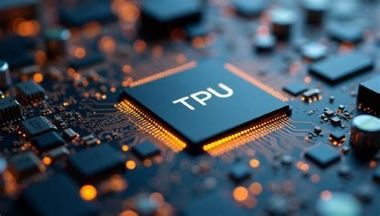
For over a decade, Google has been quietly developing its own AI chips: TPUs (Tensor Processing Units). Initially designed for internal use, these tensor processing units now power everything from the Gemini models to some Google Pixel phones.
They are specialized chips, more efficient and cheaper than NVIDIA GPUs for certain types of work, especially for large-scale inference tasks. And that, in today's market, is a huge advantage.
Google's latest generation of inference chips, the TPU 8i, triples the amount of SRAM compared to its predecessor, Ironwood, and offers 80% better performance for inference tasks at the same price. No one can ignore those figures.
NVIDIA saw the market shift coming and reacted by acquiring Groq so that it could offer inference chips to the market within a few months. But Google was already there, and now the market recognizes it.
In October 2025, Anthropic announced an agreement to access up to one million Google TPUs, with the goal of building one gigawatt of computing capacity by 2026. A landmark agreement that, according to Anthropic itself, chose TPUs for their "price-performance ratio and efficiency."
But it's not just Anthropic. Meta, one of NVIDIA's largest customers in the world, is also in advanced talks with Google to deploy TPUs on a large scale starting in mid-2026. As the world's largest GPU buyer begins to diversify, something significant is changing.
The smartest aspect of Google's move isn't just having the chip. It's the way it's offering it to the market. Instead of reserving its TPUs for exclusive use, Google is making them available to companies that, in many cases, are direct competitors in the AI business. The most recent agreement with Anthropic and Broadcom entails no less than 3.5 gigawatts of TPU capacity starting in 2027. A long-term commitment that strengthens the entire ecosystem.
By helping the competition, Google is helping itself: producing more chips, improving its technology, consolidating its position in the cloud, and building strategic alliances that go beyond a simple sale. The future belongs to those who control silicon.
Some analysts estimate that TPUs could become a $900 billion business for Google in the long term. A figure that speaks for itself.
In the race for AI, manufacturing the right chip at the right time is just as valuable as developing the best model. Google has been preparing for this moment for years. And it seems that patience is paying off.
 EN
EN  ES
ES