
Views: 10
For decades, the European automotive industry has been synonymous with innovation, quality, and global leadership. However, the shift to electric cars has changed the game and confronted European manufacturers with a reality they can no longer ignore: China has taken the lead.
While many European brands enjoyed years of stability and strong performance with combustion engines, Chinese manufacturers invested billions in batteries, software, supply chains, and electric vehicle production. The results are clear. Today, electric cars manufactured in China already represent around 20% of the European electric vehicle market, a share that continues to grow year after year.
The competition no longer comes solely from imports. Many Chinese companies have realized that manufacturing directly in Europe allows them to reduce logistics costs and minimize the impact of EU tariffs. Spain, Hungary, and other European countries have become strategic destinations for new production plants and industrial investments.
Faced with this scenario, European manufacturers have awakened from a long period of complacency. They are now requesting measures from the European Union to protect one of the continent's most important industries. Among the proposals is the promotion of labels such as "Made in Europe," "EU Origin," or similar seals that would identify vehicles manufactured in Europe and strengthen consumer confidence.
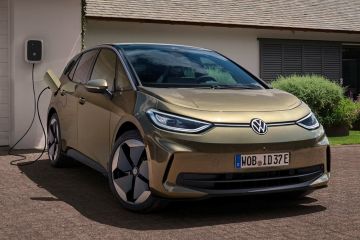
However, it's worth engaging in some self-criticism. Not all the blame lies with Asian competition. For many years, much of the European industry focused on extending the life of the combustion engine while others were rapidly advancing in electrification, digitalization, and new battery technologies.
And making up for lost time is never easy. Technology is evolving much faster today than it did just a decade ago. Every year, more efficient batteries, new intelligent driving systems, and more automated industrial processes emerge. Those who fall two or three years behind may find themselves with a technological gap that is difficult to close.
This doesn't mean that Europe has definitively lost the race. Quite the opposite. The continent boasts world-class universities, research centers, highly qualified engineers, and manufacturers with vast industrial experience. What it needs now is to combine that knowledge with faster decision-making.
Part of the solution likely lies in collaborating with leading technology companies, strengthening European battery manufacturing, streamlining bureaucracy, and accelerating innovation. Competing solely through tariffs or protectionist measures will hardly suffice without a solid industrial strategy behind it.
Politicians have an important role to play, but they can't do it all. Companies themselves must recognize that the market has changed. It's time to invest, innovate, and act with humility. Consumers no longer just buy a car; they buy technology, connectivity, efficiency, and software updates almost as frequently as they upgrade their mobile phones.
The good news is that Europe still has enormous potential to become a major player in the electric mobility of the future. But the window of opportunity is shrinking every year. The question is no longer whether Europe can manufacture excellent electric cars. The real question is whether it will be able to react with the speed demanded by a market that is advancing at an unprecedented pace.
Because what's at stake is not just the future of the European automotive industry, but thousands of companies, millions of jobs, and a vital part of the continent's industrial capability.
 EN
EN  ES
ES