
Views: 227
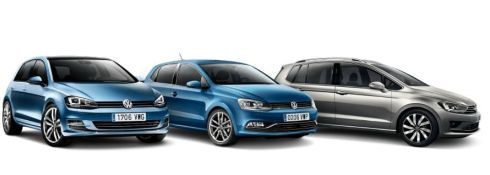
Volkswagen's recent warning about the possibility of cutting up to 100,000 jobs in the coming years has sounded like a real wake-up call for European industry. Although the plan is still subject to negotiation and faces strong union opposition, the mere fact that Europe's largest automaker is considering a restructuring of this magnitude demonstrates that the problem extends far beyond a single company. The European automotive industry is undergoing a historic transformation.
For decades, Europe led the automotive sector thanks to its technological capabilities, manufacturing quality, and the prestige of its brands. However, the market has changed at a speed that many did not anticipate. While European manufacturers were achieving good results with combustion engine vehicles, China made a decisive commitment to electric cars and, above all, to the development of batteries, the true heart of this new generation of vehicles.
Today, that commitment is paying off. Chinese companies not only dominate a large part of global battery manufacturing, but they also market increasingly competitive electric vehicles, offering an excellent balance of performance, technology, and price. Furthermore, they no longer compete solely on the basis of lower labor costs, but also thanks to their enormous capacity for innovation and development.
Another aspect that often goes unnoticed is the level of automation in their industry. China installs more than half of the industrial robots put into operation worldwide each year. This heavy investment in automation allows for more efficient manufacturing, reduced costs, and accelerated development of new models. In this area, Europe has much to learn if it wants to regain competitiveness.
As if this scenario weren't complex enough, numerous Chinese manufacturers are already building production plants in various European countries. This will allow them to manufacture within the European market, reduce logistics costs, and more easily overcome any trade barriers that may be imposed on imports.
Thinking that the problem will be solved simply by raising tariffs or imposing trade restrictions would be a mistake. These measures may offer temporary relief, but they will hardly solve a structural problem. The real answer lies in investing more in research, innovation, automation, and industrial development. Europe needs to rediscover its capacity to lead in strategic technologies instead of content to manage past successes.
And the automotive industry is probably just the beginning. Artificial intelligence, robotics, electronics, batteries, semiconductors, and clean energy are sectors where international competition will become increasingly intense. If Europe does not accelerate its industrial transformation, other markets could follow the same path the automotive industry is currently on.
For many years, we have been comfortably settled. While our companies were making profits, other countries were preparing for the next technological revolution. Now we see that leadership is never permanent and that maintaining it requires constant investment, innovation, and risk-taking.
Added to this scenario is a much more complex geopolitical context. The United States remains an important ally for Europe, but it also firmly defends its own industrial and technological interests. China, for its part, continues to strengthen its production capacity and international presence. In this new landscape, Europe needs to bolster its strategic autonomy and reduce dependencies in key sectors.
This isn't about seeking enemies beyond our borders. The main challenge is probably within our own borders. We must regain the ability to anticipate changes, commit to innovation, and collaborate much more among European countries to compete in an increasingly rapid global market.
The message Volkswagen is sending shouldn't be interpreted solely as bad news for automotive employment. It should be understood as a wake-up call for the entire European industry. We still have time to react, but the window is closing rapidly.
Europe has the talent, the knowledge, and the companies capable of competing at the highest level. What it needs now is to act more quickly, with great effort, more humility, and a long-term industrial vision. Because the future waits for no one, and tomorrow's competitiveness begins to be built today.
 EN
EN  ES
ES