
Views: 22
Self-driving vehicles represent one of the greatest technological promises of our era. Streets with less traffic, safer and more efficient journeys... the vision is captivating. And in this futuristic landscape, companies like Waymo (the self-driving car division of Alphabet, Google's parent company) are positioning themselves as absolute leaders, accumulating hundreds of millions of miles driven.
But what happens when artificial intelligence reaches a dead end? Recent statements from a Waymo representative have sparked an interesting debate and revealed a practice that many were unaware of: remote human assistance.
When a self-driving car encounters an unexpected situation—an unusual intersection, sudden roadwork, or an unforeseen event that its system doesn't fully "understand"—it doesn't stop to wait. Instead, it requests "suggestions" from a team of human operators. And what's most surprising is that these assistants aren't just in the US, but also in faraway countries like the Philippines!
It's crucial to clarify one point: this isn't remote driving. Waymo's autonomous system makes all the driving decisions. However, in those moments of "indecision" or "stuck," the artificial intelligence seeks external guidance. Imagine the car is on a stretch of road where it needs to turn, but the directions givens are confusing or not in its database. A remote operator might suggest: "Take the second right." These suggestions allow the vehicle to resolve the situation and continue its journey autonomously.
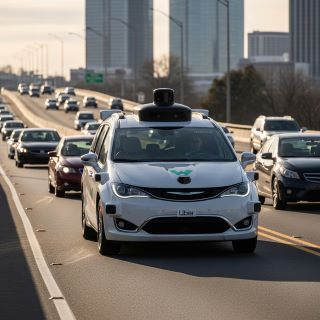
This model isn't exclusive to Waymo. A representative from Tesla, another giant in the sector, has confirmed that they also employ similar practices. The current reality is that no autonomous driving system is 100% perfect. Human intervention, in the form of "suggestions," is a lifeline for maintaining smooth operation and, above all, safety.
The news of remote assistance has raised some concerns about passenger safety. However, the data speaks for itself: Waymo's autonomous cars have proven to be statistically safer than human-driven vehicles in the same cities. "Suggestions" are an exceptional measure for exceptional situations, not the norm.
The use of operators in countries with lower labor costs, such as the Philippines, is based on economic logic. It allows for the efficient maintenance of a 24/7 support team. However, this raises questions about data security, communication latency, and the quality of intervention in a critical situation. Will the location of this "help" be a relevant factor in the future?
Waymo has traveled more than 200 million miles, establishing itself as one of the most refined systems on the market. But even the most advanced systems can encounter the unforeseen and need a "guide" to move forward.
Although autonomous taxis are rapidly expanding in various cities around the world, the legal and regulatory infrastructure is still under development. Human-machine interaction in driving, even indirectly, adds a layer of complexity to liability and safety regulations.
We are in a phase of evolution. Waymo's remote assistance is a testament to the fact that full autonomy is not yet perfect, but also to the ingenuity and adaptability of companies in overcoming challenges and advancing the technology safely.
The path to fully autonomous driving is fascinating, and each new revelation brings us closer to a better understanding of what that future will look like.
 EN
EN  ES
ES