
Views: 7
Headlines periodically bombard us with futuristic promises: Imagine a flight from Europe to the United States in just over an hour, a journey that currently takes us nearly seven hours. It sounds idyllic, almost magical. But as experts in technology and society, we must ask ourselves the big question: Do commercial hypersonic flights really make sense? It's one thing for human engineering to be capable of achieving it, and quite another for the planet to be able to sustain it.
What is hypersonic speed, and what are we facing? To understand the debate, we must first define the concept. We speak of hypersonic flight when the speed of sound is exceeded five times (Mach 5), reaching speeds above 6,000 km/h. At these magnitudes, the rules of physics change completely.
At such extreme speeds, the air not only slows the aircraft's forward motion but is also brutally compressed against its surface. This generates immense friction, raising the fuselage temperature to 2,000°C. To withstand this thermal inferno, aerospace design needs to be reinvented: from new, ultra-resistant materials to engines radically different from those currently used.
The true driving force behind this research is the military sector. If it's so complex, why does research continue? The short answer is geopolitical and military interest. Current fighter jets can only reach supersonic speeds (Mach 2) in very limited ways, as fuel consumption is astronomical.
The development of hypersonic missiles and aircraft seeks a strategic advantage unattainable by current defenses. The problem arises when attempting to transfer this military technology to mass passenger tourism.
Furthermore, current science faces a bottleneck: there are no commercially available wind tunnels capable of simulating these conditions for extended periods. Everything relies on computer simulations that then have to be tested in reality using extremely expensive prototypes and projects that take decades to mature.
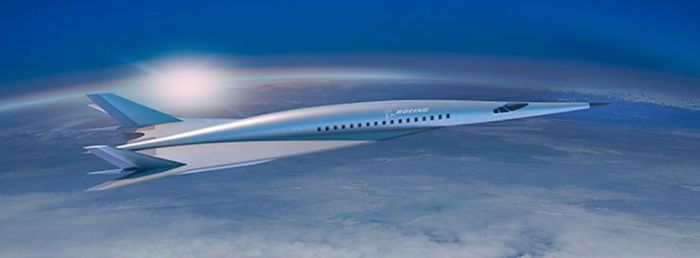
If we consider the tension between global connectivity and the climate emergency, this is where our conscious citizens should rebel. Today we live in a hyperconnected world. We can meet, negotiate, and virtually embrace people on other continents in real time and at no cost. Transoceanic travel rarely stems from a life-threatening emergency; it has become, for the most part, a purely leisure activity.
Traveling thousands of kilometers for pure pleasure, doing so at high speed with the consequence of consuming enormous amounts of energy and polluting the environment, is a luxury the planet can no longer afford.
The energy needed to propel a hypersonic aircraft requires burning vast volumes of conventional fuel or developing extremely expensive and scarce synthetic alternatives. In the midst of a climate crisis, exponentially increasing our carbon footprint to save ourselves a few hours of flight time seems like the wrong approach.
Human beings demonstrate undeniable technical brilliance, but sometimes this brilliance goes hand in hand with a profound collective irresponsibility. Continuing to damage the environment for future generations for the mere whim of extreme speed borders on the absurd.
Technology should advance to solve humanity's greatest challenges—such as decarbonizing current aviation—not to create new, unsustainable whims. Because, ultimately, just because something is technically possible doesn't mean it's ethically acceptable.
Humans are that brilliant and that stupid at the same time.
 EN
EN  ES
ES