
Views: 8
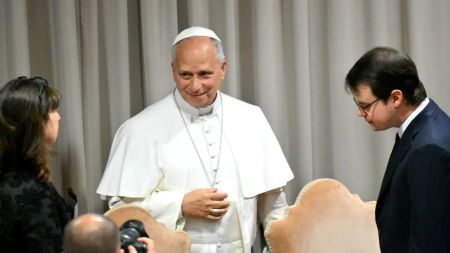
Artificial Intelligence is advancing at breakneck speed. Every week, new tools, new models, and new promises appear about how this technology will transform our lives. However, amidst this technological enthusiasm, one of the world's most influential and independent voices has issued a warning that deserves to be heard: that of the Pope and the Catholic Church. Pope Leo XIV has published the encyclical Magnifica Humanitas, the first in history dedicated entirely to Artificial Intelligence.
I wanted to wait a few weeks after the publication of this document to observe the reactions of those most involved in the development of AI. And I must admit that I wasn't surprised by what happened: practically nothing. Very few responses, scant debate, and rather limited media attention.
Perhaps the reason is precisely the document's central message. The Pope's stance is courageous because it places people above technology and above economic gains. At a time when major technology companies are vying for dominance in the Artificial Intelligence market, hearing a voice calling for prudence, ethics, and the protection of human dignity is not particularly comfortable for many players in the sector.
One of the most relevant aspects of the message is the idea that AI companies cannot self-regulate. This assertion is not new, but it remains extraordinarily relevant. Economic history demonstrates that when enormous financial incentives exist, relying solely on the goodwill of companies is often insufficient. Therefore, the Vatican insists on the need for public oversight and regulatory frameworks that ensure the technology serves the common good.
The problem is that governments are moving far too slowly. Europe has taken some important steps to regulate AI, but its processes are complex and protracted. Meanwhile, major powers view this technology as a strategic tool for economic, military, and geopolitical power. The race to lead in Artificial Intelligence is no longer just a business matter; it is also a matter of global influence.
In this context, it is especially valuable to have independent voices capable of reminding us of something fundamental: technology is not an end in itself. AI can bring enormous benefits in areas such as medicine, education, and productivity, but it can also increase inequality, facilitate information manipulation, or further concentrate power in a few organizations if adequate limits are not established.
Despite everything, today's reflection is not intended to be pessimistic. On the contrary. History shows that the most important social changes often begin with people who refuse to accept that things are inevitable. Defending freedom, democracy, and human rights requires critical thinking, participation, and civic engagement.
Perhaps we cannot change the course of the world overnight. But we can inform ourselves, debate, demand transparency, and support initiatives that place people at the center of technological development.
Artificial Intelligence will shape much of the 21st century. The question is not whether we should use it, but what kind of society we want to build with it. And there, as this reflection from the Vatican reminds us, the important thing is never to give up.
 EN
EN  ES
ES