
Views: 2
Sometimes the most important news goes almost unnoticed, even though it marks a turning point in an industry as competitive as electric vehicles. This is the case with Xiaomi's announcement: its electric car division reached profitability in just 19 months.
This is a surprising fact considering that many traditional manufacturers need between 8 and 10 years—and some even more—to achieve profitability in such a demanding segment.
The achievement is even more remarkable when we remember that Xiaomi started as a manufacturer of consumer electronics, smartphones, and smart devices. Moving from that world to the design, engineering, and production of electric vehicles seemed, at first glance, a risky leap. However, the company has demonstrated that a combination of a strong brand, vertical integration, and a prudent strategy can yield extraordinary results.
Xiaomi started with an advantage: a solid brand image, millions of loyal customers, and a clear perception of a reliable product with good value for money. Even so, the automotive market is entirely different, with strict regulations, enormous manufacturing costs, and fierce competition. It was easy to make a mistake.
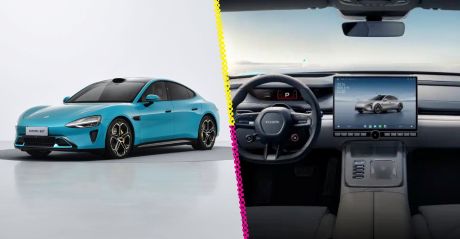
But Xiaomi chose a sensible path:
. A single model to start with, the Xiaomi SU7, to avoid dispersing resources.
. Rapid production scaling, supported by optimized industrial processes.
. Cost control, one of its strengths since its founding.
. Proprietary technology, inherited from its electronics ecosystem, to differentiate itself.
The result: a debut with very solid sales in China and growing interest in the international market.
Xiaomi achieving profitability in less than two years is not only a record; it's also a clear message to the sector: electric mobility is still open to new players, provided they combine technological vision, economic discipline, and the ability to execute.
This doesn't mean their path will be easy. Global competition in electric cars is intensifying, and margins remain very tight. But getting off to such a good start shows that the company has a good understanding of where the risks lie… and how to manage them.
In a market where many companies burn through money without seeing the goal of profitability, Xiaomi's case is a breath of fresh air. And, in my opinion, an example of how a prudent strategy can pay off even in sectors dominated by established giants.
I wish them all the best
 EN
EN  ES
ES