
Views: 2
Waymo has spent over a decade developing and perfecting its autonomous vehicles. It is, without a doubt, the leading robotaxi company in the West. Until now, its activity has focused on urban areas of cities like Phoenix, San Francisco, and Los Angeles, where its cars have been operating driverless for years.
But it has just taken a step that could be a game-changer: expanding its service to the highways.
This is no small move. Highways represent a very different environment than a city. Although they appear simpler—fewer pedestrians, fewer turns, fewer unexpected events—they demand a much higher level of reliability, safety, and responsiveness. The challenge is immense: high speed, heavy traffic, and zero margin for error.
In a city, a robotaxi can stop unexpectedly without causing immediate chaos. However, on a highway, stopping unexpectedly can trigger a chain-reaction accident or a massive traffic jam. At speeds of 100 km/h or more, a failure in autonomous driving is not an option.
Waymo has approached this scenario with the same philosophy that has guided its trajectory: extreme caution and an obsession with safety. Its cars incorporate a redundant dual-computer system. If one of the systems detects a failure, the other instantly takes control and steers the vehicle toward the nearest exit to safely leave the highway.
This level of redundancy is key for regulators and the public to perceive these vehicles as prepared for high-speed environments.
Waymo has been testing highway journeys with passengers on board for months in some of the cities where it operates. After validating thousands of kilometers without incident and collecting essential data, the company is ready to launch the service to the public
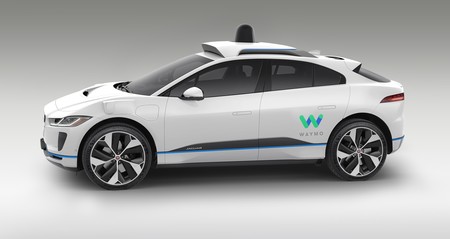
It will do so gradually, city by city, following a cautious but firm approach, as it has always done.
This step represents a substantial change. Until now, Waymo's urban trips, although very safe, could be longer than a conventional journey because they avoided highways.
From now on, journeys will be faster, more efficient, and more useful for many real users. Furthermore, operating on highways opens the door to a key target: airports.
And this is no small detail. More than 20% of trips taken by Uber, Lyft, and similar services are related to transfers to or from an airport. It's one of the largest and most profitable market niches in the ride-hailing sector.
But entering an airport is no easy feat. They are congested environments, with thousands of vehicles in motion, chaotic loading and unloading zones, overlapping lanes, and rapid decisions in very confined spaces.
If Waymo manages to offer a reliable service in these locations, it will have demonstrated that its technology is ready for the big commercial leap. And everything indicates that this moment is very near.
Waymo has historically been the technological benchmark in autonomous driving, but also a very expensive company to maintain. Its investors have been funding its development for over 10 years, with their sights set on a future that, until now, seemed elusive.
Entering highways changes the game. For the first time, Waymo has access to higher-volume, more profitable routes. If it manages to scale its service without major incidents, it will be closer to the break-even point, a long-awaited milestone.
And it will also distance itself from competitors like Zoox, which is still in the experimental phase. Waymo doesn't just want to lead the technology; it wants to lead the business.
And the key: keeping safety above all else. If there's one thing that has characterized Waymo since its inception, it's its conservative approach. It has advanced slowly, step by step, prioritizing safety over commercial speed.
This approach has allowed it to operate for years without major incidents on thousands of daily trips. If it manages to maintain this level of reliability now that it's entering highways and airports, it will have demonstrated that robotaxis are not only possible… but inevitable.
Autonomous driving is no longer a futuristic experiment. It's here, operating every day, and beginning to expand into areas that recently seemed beyond its reach.
Very soon we'll see how this new phase transforms transportation in cities and beyond. And hopefully, it will do so while maintaining the responsibility and rigor that Waymo has demonstrated thus far.
 EN
EN  ES
ES