
Views: 0
Talking about autonomous taxis inevitably leads to talking about Waymo. The company has been developing driverless driving technology for over 15 years and has been refining its system step by step. It recently unveiled the sixth generation of its autonomous vehicles, a move that is not only technical but clearly strategic.
The new platform is based on a model from the Chinese manufacturer Geely, an industrial partner with a strong capacity to produce vehicles at competitive costs. This choice is not accidental: if autonomous driving is to be profitable, it needs to scale.
One of the most striking changes in this sixth generation is the reduction in the number of sensors. Fewer sensors, but more capable. The new system integrates 13 cameras, 6 radars, and 4 lidars. In the previous generation, the vehicle used up to 29 cameras.
Reducing hardware might seem like a step backward, but it isn't. Current sensors are more precise, more robust, and cheaper. Technology has advanced enough to offer better performance with fewer components.
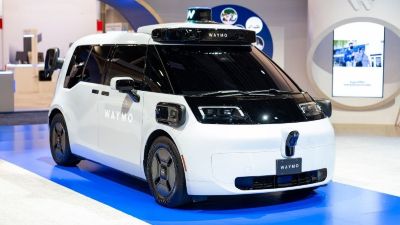
This directly impacts costs. And in a fleet-based business model, every dollar saved per vehicle counts.
The system provides 360-degree visibility around the car and can detect objects up to 500 meters away at night. This level of perception far surpasses human capabilities in some scenarios.
Furthermore, for the first time, Waymo has incorporated external microphones. The goal is for the vehicle not only to "see" but also to "hear." Detecting an ambulance before it enters the field of vision can make all the difference in safety. The philosophy is clear: to replicate—and even improve upon—human senses through technology.
A less visible but crucial detail is the incorporation of automatic sensor cleaning systems. Rain, dust, snow, or insects can compromise the accuracy of cameras and lidar.
In a controlled environment, this is easily resolved. In real-world operation, with thousands of vehicles on the road every day, reliability is key. Automating basic maintenance increases service availability and reduces operating costs.
Autonomous driving doesn't depend solely on artificial intelligence. It depends on practical engineering.
Waymo is also testing this sixth generation in the Hyundai Ioniq 5. This indicates an interesting strategy: not depending on a single vehicle model. The more independent the system is from the base car, the greater the flexibility for global expansion. Integrating the technology across different manufacturers facilitates commercial agreements and reduces industrial risks.
Currently, Waymo operates more than 3,000 autonomous taxis in various cities. This is a significant number, but still very small compared to the global urban transportation market.
The biggest challenge isn't proving that their service works, which it already is, but demonstrating that it can generate sustainable profits.
The sector remains a niche market with enormous future potential, but mass adoption is not yet imminent. Regulation, social acceptance, and the economics of the service are decisive variables.
Today, Waymo sets the standard for autonomous taxis. However, it's not alone. Other technology players and traditional manufacturers are also making progress.
The sixth generation demonstrates something important: evolution doesn't stop. Greater efficiency, lower costs, and increased robustness are the pillars of the next leap.
The future of autonomous urban transportation hasn't quite arrived yet. It's closer than it was five years ago, but it's not quite there yet.
And Waymo wants to be at the forefront when that moment arrives.
 EN
EN  ES
ES