
Views: 0
In 1959, Volvo forever changed the automotive industry with the invention of the three-point seat belt, an advancement that, over the years, has become a global safety standard. More than six decades later, Volvo continues to lead innovation in driver and passenger protection and has introduced a radical improvement to its seat belt system.
This time, technology joins forces with artificial intelligence and advanced sensors to ensure the seat belt not only fits each individual better but also adapts to the circumstances of an accident. Let's explore how this new revolution works.
Since its creation, the three-point seat belt has been a fundamental tool for keeping us safe in a vehicle. This device works by restraining the driver's or passengers' bodies to the seat in the event of a collision, preventing the body from being thrown forward during the impact.
The seatbelt consists of three key elements: the webbing, the buckle, the retractor mechanism, and the pretensioner, all of which adjust to the wearer. The pretensioner is the first component to activate during an accident, tightening the belt and ensuring the occupant is securely fastened to the seat.
Volvo has taken a giant leap forward by introducing a more advanced seatbelt system using state-of-the-art sensors. This new technology can measure the weight and size of each occupant, adapting the seatbelt adjustment to their physical characteristics.
Furthermore, the sensors can also detect the type of accident as it occurs, allowing the seatbelt pretension to be adjusted dynamically, depending on the type of impact and the needs of the moment.
The development of this system was made possible through the collaboration of technology giants such as Google, Qualcomm, and Nvidia, who contributed their expertise in data processing and the integration of artificial intelligence. In fact, the system performs calculations and adjustments in milliseconds, ensuring the seatbelt is perfectly fastened for a critical fraction of a second in the event of an accident.
The most interesting aspect of this new version of the seatbelt is that it's designed to learn over time. Thanks to artificial intelligence, the system will constantly improve based on the information it gathers during each journey. These improvements will be sent remotely and automatically to vehicles via online updates, a process already common in other technological devices but one that makes a real difference in the field of automotive safety.
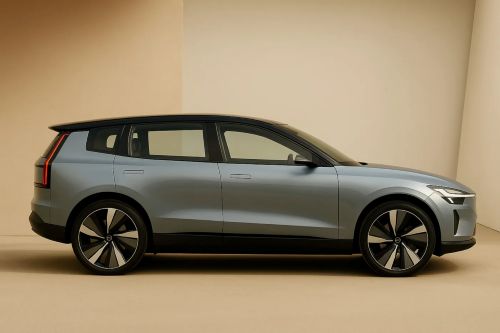
This innovative system will debut in the new Volvo EX60, a model designed with safety and comfort in mind, while also taking full advantage of current technological advancements. These kinds of advancements not only improve the user experience but also reinforce Volvo's commitment to safety, a priority for the brand since its inception.
Volvo's commitment to safety remains one of its fundamental pillars. With this new improvement, the brand not only demonstrates its capacity for innovation but also reaffirms its leadership in vehicle safety. In a world where technology is advancing by leaps and bounds, this improvement to the seatbelt sets a precedent for the future of vehicle safety systems.
Thank you, Volvo, for continuing to innovate to save lives.
 EN
EN  ES
ES