
Views: 2
The world of self-driving cars continues to advance, albeit at a more uneven pace than many imagined a few years ago. Some companies are already conducting test drives with customers in highly controlled environments, while others continue developing their technology, waiting for the right moment to make the leap to commercialization. And in this still fairly open landscape, new players continue to emerge.
One of the names that is starting to gain ground is Tensor, a company that, although it may seem new to the general public, has been working on autonomous driving for nearly nine years. After several partial presentations in 2025, it was at CES 2026 where it made its world debut, announcing its intention to put its car on sale in the second half of 2026.
For now, the company has not specified the final price or the exact launch date, nor has it provided all the technical details. Even so, what has been shown is striking and deserves attention.
Tensor's vehicle is an electric SUV designed from the ground up for autonomous driving. It's not a traditional car with added technology, but rather a system designed to operate automatically in virtually all its functions.
Inside, it integrates a powerful NVIDIA computer, capable of processing enormous volumes of data in real time from a massive array of sensors: cameras, radar, lasers, and lidar. According to the company, the car incorporates around one hundred sensors, which gives an idea of the system's complexity.
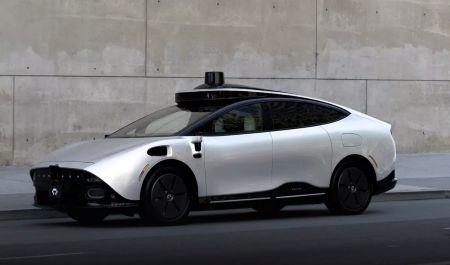
Automation goes beyond driving. Tensor claims the vehicle can park itself, manage battery charging, and even activate automatic cleaning systems, all without direct human intervention.
One of the most ambitious aspects of the proposal is that Tensor claims to have achieved Level 4 autonomous driving, which means the car can operate without a driver in certain conditions and areas, without the need for constant supervision.
The vehicle incorporates a steering wheel, but it can be retracted at will, reinforcing the idea that the car is designed to operate without the user having to drive.
However, a dose of realism is necessary here. Obtaining official certification to sell a Level 4 autonomous car to private individuals is extremely complex. Companies like Waymo and others have been accumulating millions of kilometers of testing for years and still operate under strict restrictions.
Tensor states that its primary focus is on selling to private customers, something unusual in this sector, where most companies prioritize fleets of autonomous taxis or mobility services. Even so, it's reasonable to think that sales to fleets would be welcome if the opportunity arose.
For now, the lack of detailed technical data prevents serious comparisons with other autonomous vehicles already in advanced testing. And although the announcement sounds promising, obtaining regulatory approval in such a short time seems difficult.
As is often the case in this sector, the marketing rhetoric is optimistic. Perhaps too optimistic. Even so, Tensor presents an interesting proposal, well-aligned with the direction the industry is heading: software-defined vehicles, advanced sensors, and powerful computing capabilities.
Whether it will deliver on its promise to reach the market in 2026 remains to be seen. But it is certainly a project worth following.
You can visit the company's website at: https://www.tensor.auto/
And a video at: https://www.youtube.com/watch?v=wcLXmTFPyYU
 EN
EN  ES
ES