
Views: 4
China is very clear about its desire to have a leading technological position in the world and to be independent of the USA, and that means forging its own path.
Europe is a collection of countries that understand each other on many things and disagree on others, with a great technological dependence on the USA, and which in many areas are unclear about where they want to go.
On the subject of AI, as in so many others, Europe is totally dependent on the USA, and I think they simply accept it.
The case of China is different. They aim for global leadership and do not want to depend on the USA. On the subject of chips and AI, even though the US government allows Nvidia to sell them advanced chips, they are going to enhance their capabilities to develop and manufacture AI with their own resources.
And they face a very difficult task. Because the problem is the software, not just the silicon.
What China DOES have:
. Chip design capabilities
. Increasingly competitive manufacturing
. Powerful companies like Huawei (Ascend), and others
What it DOESN'T have (yet):
. A true equivalent to CUDA with:
. 15+ years of maturity
. A global ecosystem
. Massive adoption
Nvidia's biggest difference is its significant accumulated advantage. It started in 2006 and bet on general-purpose computing when no one else saw it, and it also created tools before modern AI even existed.
And when the AI boom arrived, Nvidia (with CUDA) was already there, while China lags behind and faces restrictions.
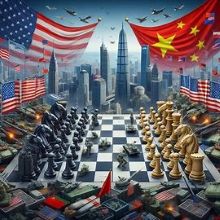
This doesn't mean China can't catch up to Nvidia, but it won't be quick or cheap. They need years of stability, and I think that's also why they're betting on open standards, to see if Western developers want to use them. But that can't be imposed by decree.
Regarding chips, China isn't looking to have the best chip, but one that's good enough and whose supply no one can cut off. And that's why they want to make them themselves. But the "system" (like CUDA) is more important than the chip.
China is about 10 years behind in software, and catching up is slow and very expensive.
China is developing its platforms (from Huawei and others) and incentivizing universities and companies to use domestic software. It's a long road, but it has vast technical, human, and economic resources to try to get there.
It understands that even though its resources are currently inferior, they work, they can be improved, and no one is blocking them.
I think there's an important difference: while we in Europe are debating, China is building, and building fast.
Today, China is a world leader in solar, wind, batteries, electric cars, etc.
It is rapidly installing new sustainable energy sources and ensuring it has cheap energy for the future of factories, data centers, electric mobility, etc., because they understand that without abundant energy, there is no industry, no AI, nothing.
We cannot forget that China has a powerful weapon: a captive market of 1.4 billion people. And that gives it the capacity to impose certain standards.
I think they are very pragmatic. If something works in China, it is scaled up, made cheaper, rapidly improved, and then exported.
They did it with mobile phones and solar panels, and they are doing it with batteries and electric cars. While in Europe we debate when we will stop using combustion engines, they are manufacturing better electric cars every day—cheaper and with greater range. Who do you think will lead the electric car market in the world?
In short, China has no hang-ups and no longer tries to copy or follow others. What it wants is independence; he doesn't want to win today, but rather avoid losing tomorrow. it wants to create it’s own technology hub and is playing for the long haul.
The future belongs to those who get it through their hard work
 EN
EN  ES
ES