
Views: 1
The race to dominate the autonomous taxi business is accelerating. What seemed like a futuristic vision just a few years ago is now a battleground where major tech companies, automakers, and mobility firms are competing to lead the transportation of tomorrow.
But the road is not easy. Making a vehicle operate safely, legally, and profitably without a driver requires an extraordinary combination of hardware, software, sensors, and operational management.
And that's only within reach of those with deep pockets, like Alphabet and others, or those who know how to collaborate. Because a driverless car has a lot of technology behind it and requires significant investment.
For an autonomous taxi to work, it's not enough to just add cameras and a computer:
. It needs a complex architecture made up of:
. Lidar sensors that "read" the environment in 3D.
. Cameras that recognize objects, signs, and pedestrians.
. Radar and ultrasound for working in poor visibility conditions.
. Highly powerful processors with artificial intelligence capable of analyzing millions of data points per second.
. Autonomous driving software that combines all of this in real time.
. And years of testing in different circumstances to guarantee the safety of passengers and pedestrians. And that represents a lot of money.
For years, companies like Waymo (owned by Google) tried to do almost everything themselves: design the sensors, develop the software, manage the fleet, and provide customer service.
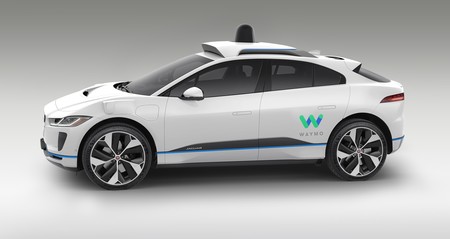
But over time, it has become clear that almost no one can do it alone. The new era is based on strategic alliances, where each party contributes its expertise.
One of the most recent and ambitious of these alliances includes nVidia, Stellantis, Foxconn, and Uber, with a clear objective: to launch thousands of autonomous taxis onto the market starting in 2028. And with a division of tasks, it seems logical:
. Stellantis, the group that includes brands like Peugeot, Fiat, and Jeep, manufactures the vehicles.
. Nvidia provides the supercomputers based on its Drive chips, specifically designed for autonomous driving.
. Foxconn, the Taiwanese giant known for assembling iPhones, will manufacture components and help introduce the vehicles in Asia.
. Uber will contribute its mobility platform and customer management expertise.
Each company leverages its experience, diversifies risks, and positions itself in a market that could generate hundreds of billions of dollars in the next decade. It seems, ultimately, a smart move.
But this is a board with many players… and no clear winner.
Waymo remains, for now, the industry leader. It operates fleets of autonomous taxis in Phoenix and San Francisco and plans to expand to more cities in the United States, Asia (Tokyo, etc.), and Europe (London, etc.).
Motional (Hyundai + Aptiv), Zoox (Amazon), and many Chinese startups are also vying for their share of the market.
The difference is that now, large companies no longer compete alone but share technology, suppliers, and strategic partners.
Nvidia, for example, works with GM, Volkswagen, Mercedes, and BYD, in addition to Uber. They are all trying not to be left out of the future of urban transportation.
And the customers? That's the missing piece. Technology is advancing, partnerships are multiplying, but success will depend on a much more human factor: user trust.
For now, most people still prefer a human driver. Doubts about safety, legal liability, and potential system failures continue to weigh heavily. Until that changes, autonomous taxis will remain more of an experiment than a widespread reality.
Despite the challenges, the trend is unstoppable. The costs of sensors and processors are falling year after year. Artificial intelligence is improving at breakneck speed. And cities, pressured by congestion and pollution, are seeking more efficient and sustainable solutions.
Everything points to us seeing autonomous taxis in many cities around the world in the next decade, although probably with a remote safety operator or on predefined routes at first.
The sector is buzzing, alliances are forming, and competition is intensifying. As some in Silicon Valley say, "If you can't predict the future, at least participate in it."
And that's precisely what Nvidia, Uber, and others are doing. Perhaps we'll see results before long.
 EN
EN  ES
ES