
Views: 0
With the arrival of cold weather, our social media feeds and televisions are flooded with promising advertisements: small devices that "heat an entire room for pennies" or energy-efficient heaters with modern designs. However, I feel it's my duty to tell you the truth: in the world of electric resistance heating, miracles don't exist.
Thermodynamics doesn't understand marketing. Almost all of these devices work using the Joule effect. This is basic science: an electric current passes through a wire (resistance), it heats up, and emits heat. The rule is immutable: to generate a certain amount of heat, you need to consume an equivalent amount of electricity.
If a heater has a power rating of 2,000 W, it will consume 2,000 W, regardless of whether it's large, small, or if the advertisement claims it's "magical." Calling them "energy-efficient" is, quite simply, a lie. The appliance will heat in direct proportion to the amount of energy it draws from your electrical grid.
The danger of "small and cheap" devices. There's a common misconception that if an appliance is small, it consumes little energy. Nothing could be further from the truth. Many of these mini-heaters that plug directly into the wall are made with low-quality materials.
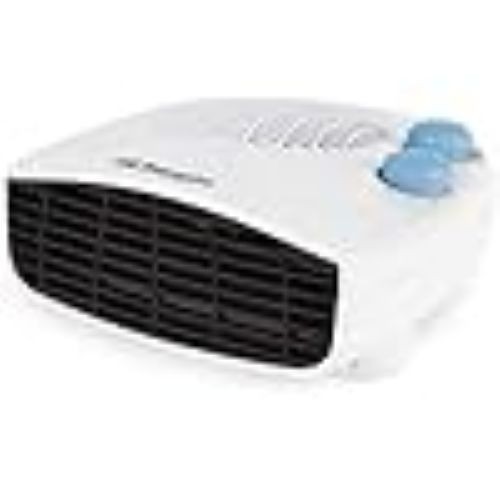
This is not only inefficient but also dangerous. A poorly manufactured device that handles high power in a small plastic body can cause overheating or short circuits, resulting in a much bigger problem than a high electricity bill.
If you're truly looking to save money, the answer isn't an electric heating element, but a heat pump (air conditioners with a heating function).
Unlike radiators, a heat pump doesn't "create" heat from nothing; instead, it moves heat from the outside to the inside. For every 1 kW of electricity it consumes, it can deliver 2.5 kW or more of heat to your home. It's the most efficient system available today, although its initial installation is more expensive and generally permanent, though some portable options exist.
The best advice: insulate before heating. No appliance, however efficient, will be very useful if heat escapes through cracks in windows or poorly insulated walls. The best energy is the energy that isn't used.
In short: be wary of "miracle products." To heat your home when it's cold, opt for good insulation and proven systems. Physics always has the final say over marketing.
 EN
EN  ES
ES