
Views: 0
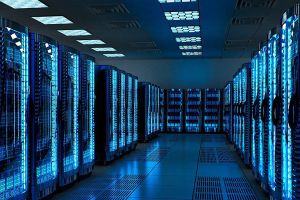
Artificial intelligence is changing many things, and one of them—perhaps less visible to the general public—is the massive growth of data centers. These are large facilities housing thousands of servers and millions of chips capable of performing colossal numbers of calculations. A genuine race to increase this capacity is taking shape around AI.
The International Energy Agency estimates that data centers consumed around 415 terawatt-hours of electricity in 2024, representing approximately 1.5% of global electricity use. Current forecasts place consumption near 950 terawatt-hours by 2030. AI is a primary driver of this growth.
The problem is that these centers require enormous amounts of energy. A conventional data center might consume between 10 and 25 megawatts, whereas large centers specialized in AI can exceed 100 megawatts. Some projects currently under construction are reaching extraordinary scales.
There is also a powerful business rationale behind this expansion. At the start of the AI revolution, the priority seemed simple: grow rapidly, acquire users, and avoid being left behind in the technology race. Major companies needed to demonstrate to the market that they were ready for this new revolution.
This meant investing vast sums of money in chips, servers, networks, and data centers. Manufacturers like Nvidia—and, to a lesser extent, Google—have benefited enormously from this situation, as every new center requires significant quantities of specialized processors.
However, things are changing. Chips are becoming increasingly powerful, and AI models are becoming more efficient.
The International Energy Agency notes that energy consumption per AI task has dropped remarkably fast thanks to hardware and software improvements. At the same time, models capable of performing specific tasks using far fewer resources are emerging.
This raises an interesting point. At first, it seemed we needed to fire a cannon to solve any problem. Now, we are discovering that some issues can be perfectly resolved with a rifle, and others even with a pistol.
Not every question requires millions of calculations performed in fractions of a second. If we want an immediate response, we need significant processing power at the ready. But if we can wait a few seconds—or even minutes—the requirements change drastically.
This opens the door to local AI. An increasing number of models can run directly on a computer, eliminating the need to constantly send our data to a massive data center. Chip manufacturers are developing processors specifically designed to run artificial intelligence on personal devices.
Relatively compact systems capable of running AI models locally are already available for a few thousand dollars. This could be a game-changer. Local AI also offers a crucial advantage: privacy. Data can remain on the computer itself, without needing to be sent to an external server.
I personally use an open-source AI model installed on my computer for a specific application. It isn't particularly fast; sometimes I have to wait 20 to 30 minutes for a result. But I don't mind—while the computer works, I attend to other tasks. In return, I keep my data under my own control.
Of course, this doesn't mean large data centers will disappear. They will remain essential for training massive models, serving millions of simultaneous users, and running applications that require immense computing power.
But perhaps the right question isn't whether we need data centers, but rather how many we need and what tasks they should actually perform. The evolution of open-source models, specialized chips, and locally run AI could shift the balance.
China is the country pushing hardest for open-source AI, while the United States and other nations are accelerating this evolution; smaller, cheaper, and more efficient models are emerging every few months. That is why I believe we are entering a new era.
In the coming years, we may discover that not everything needs to be in the cloud and that many AI tasks can be performed directly on our own computers.
Perhaps the next artificial intelligence revolution won't just be about building increasingly large data centers. Perhaps it will be precisely about needing fewer data centers to do far more things.
 EN
EN  ES
ES