
Views: 0
Companies, like living organisms, need to adapt to their environment to survive. Customers, technology, competition, costs, laws, and geopolitical conditions change, and companies that can react quickly have a much greater chance of continuing to move forward.
This adaptability is especially important in technological companies. In these sectors, environmental conditions can change in a matter of months, or even weeks. A new technology, an unexpected regulation, or a political decision can completely transform a market.
A very interesting example can currently be found in the world of robotics. RoboStore had become one of the main North American distributors of humanoid and quadruped robots from the Chinese company Unitree Robotics. The company claims to have sold and deployed more than 1,500 robots, working with universities, research centers, and large technology companies.
The business model seemed clear: sell the robots, install them, provide technical support, training, and spare parts, and assist the customer during their use. But the surrounding conditions changed radically.
The United States has tightened restrictions on certain advanced robots manufactured abroad, effective from 2026. The FCC added this type of equipment to its so-called Covered List, making it more difficult to authorize new sales in the US market. The argument used by the authorities is the protection of national security and critical infrastructure.
For a company whose business depended largely on importing robots, this could become an existential problem. And this is where things get really interesting.
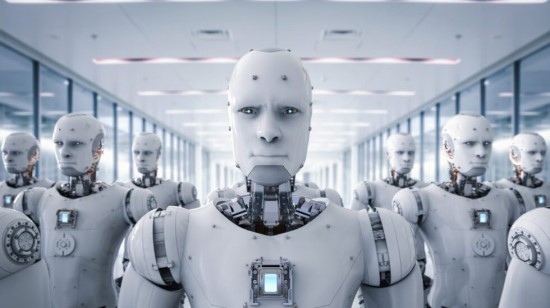
Instead of simply waiting to see what would happen, RoboStore accelerated a change in strategy and launched Robo Inc., a new company focused on the manufacture and integration of robots in the United States. Its new 66,000-square-foot Long Island facility is expected to be fully operational in the first quarter of 2027.
In other words, the company has transitioned from primarily a distributor to positioning itself as a manufacturer, integrator, and provider of robotic solutions. This, in my opinion, is a superb example of business agility.
Furthermore, the experience gained from selling and installing robots can now become a competitive advantage. Robo Inc. has firsthand knowledge of its customers' needs, the problems that arise during installations, and which applications truly make sense. It's not starting from scratch.
And this phenomenon will likely extend far beyond a single company. China boasts of a powerful robotics industry and a vast component supply chain. Unitree, for example, is experiencing tremendous growth and recently had a spectacular IPO in Shanghai.
Therefore, attempting to completely close off a technology market through trade barriers can be far more complicated than it seems. Supply chains can be reorganized, components can be integrated in other countries, and agreements can emerge between local manufacturers, distributors, and integrators.
Moreover, technology is constantly seeking alternative paths to meet a need. It's difficult to put a stop to a field where real demand exists.
Of course, a company's survival depends on many factors: funding, talent, customers, technological capabilities, costs, and strategy. But there's one I consider especially important: the ability to change before it's too late.
I must admit that I admire Robo Inc.'s speed and determination in reacting to such a significant external change. They understood that the environment had changed and, instead of remaining stuck in the old model, they decided to build a new one. I congratulate them on this and wish them all the best.
Because, in the end, perhaps the best definition of a technology company isn't one that perfectly knows the future, but rather one that is agile enough to adapt when the future changes.
 EN
EN  ES
ES