
Views: 0
For years, the demise of physical media seemed a distant possibility. However, reality has finally prevailed. Whenever we need a program, a video game, or an application, the most common practice is to acquire it online and download it in a matter of minutes. What was once a convenient alternative has become the norm.
It was a death foretold. Just a few years ago, it was still common to find shelves overflowing with programs and video games in computer stores. Today, however, those spaces have been disappearing. Personally, in the last two years, I've seen two stores specializing in selling computer games close, further proof that the market has changed forever.
The final blow came with Sony's recent announcement: starting in January 2028, all new PlayStation video games will be distributed exclusively in digital format, definitively abandoning the physical disc. The company justifies this decision by citing changing consumer habits, as over 80% of game purchases are now made via digital download. All indications suggest that other manufacturers will follow suit.
At first glance, this might seem like a logical change. Downloads are fast, convenient, and eliminate the need to travel. However, behind this convenience lies a much more significant issue: ownership.
When we bought a program on a CD or DVD, that product was truly ours. We could install it, save it, lend it, or even sell it secondhand. The physical medium represented tangible property that no one could take away from us.
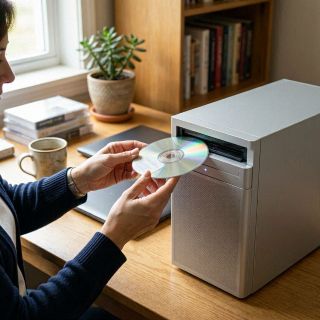
Today, the situation is very different. We no longer buy the program itself, but rather a license to use it. That is, the manufacturer grants us permission to use the software under certain conditions. This license may be limited to a single computer, require a permanent internet connection, or depend on the company's servers remaining operational.
In other words, we are no longer the absolute owners of what we have paid for. The vendor can remotely control where we use the program, prevent its installation on other devices, or even modify the terms of service with a simple update. Technically, we still have access to the software, but control is no longer entirely in our hands.
This model offers advantages for companies, as it reduces piracy, facilitates updates, and eliminates manufacturing and distribution costs. However, it also concentrates much more power in the hands of manufacturers and limits rights that consumers have taken for granted for decades.
Perhaps the most worrying aspect is that this change has come about gradually. Little by little, we have accepted new terms of service, mandatory accounts, online activations, and digital licenses with hardly any questioning. Convenience has ended up outweighing ownership.
It is true that technology evolves and that many transformations are inevitable. But it is also worth asking whether all these changes truly benefit the user or whether, on the contrary, we are relinquishing rights that we previously took for granted.
Physical media will disappear sooner or later. That seems inevitable. What remains to be decided is whether, in this completely digital future, we will continue to be true owners of what we buy or simply temporary users of a license controlled by someone else.
And this applies to almost any purchase. Take a car, for example. With online updates, the manufacturer can control some of what we do and even charge us for an "extra service." In that case, the car is no longer solely ours. Beware of what's coming!
 EN
EN  ES
ES