
Views: 25
Autonomous taxis have gone from science fiction to an everyday reality in several US cities. And if there's one name that stands out above the rest in this sector, it's Waymo, the company that has been leading the development of autonomous vehicles for over a decade. A few weeks ago, the company once again made headlines by announcing a $16 billion capital injection, intended to expand and consolidate its robotaxis network both in the US and, in the medium term, in other international markets.
Waymo is not a newcomer to the startup scene. Its origins date back to 2009, when it began as an internal Google project. Since then, it has undergone constant technological evolution, going through multiple generations of sensors, perception software, artificial intelligence, and control systems. This long journey explains why it is now considered the most advanced autonomous driving platform in the world, although it is no longer the only one in this race.
Unlike other competitors, Waymo isn't limited to pilot tests or controlled demonstrations. Its vehicles complete more than 400,000 paid trips every week in cities like Phoenix, San Francisco, Los Angeles, and Austin. These are real trips, with real customers, and in complex urban traffic, which makes a key difference compared to other projects still in the experimental phase.
According to the company's own data, around 15 million autonomous taxi rides were completed in 2025 alone. This volume is becoming significant and has been achieved without serious incidents, although, naturally, there have been some isolated incidents. Waymo insists—and the data supports this claim—that its vehicles are much safer than cars driven by humans, reducing accidents and potentially saving thousands of lives in the long run.
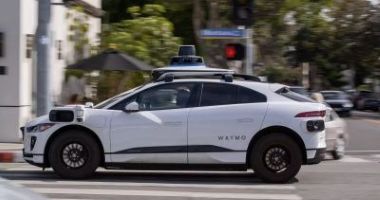
Despite these advances, it's important to maintain a realistic perspective. Autonomous cars are not yet ready to dominate the world's cities. Years of development, regulation, urban adaptation, and, above all, social acceptance remain. However, the trend is clear: with each passing year, the technology improves and the margin of error shrinks.
The biggest obstacle is no longer just technological, but economic. None of the companies operating autonomous taxis are currently profitable. In Waymo's case, if we take the trips taken in 2025 as a benchmark and assume an average price of $25 per ride, revenue would be around $400 million annually. A respectable figure, but insufficient to cover costs that translate into losses of nearly $3 billion.
Why are they losing so much money? The answer is simple: current autonomous vehicles are extremely expensive. LiDAR sensors, radar, cameras, redundant systems, and powerful computing platforms raise the price far above that of a conventional car with a driver, in addition to complex management. Until these costs decrease drastically, the business model will continue to be unprofitable.
Other companies in the sector, such as Zoox or emerging startups, survive thanks to constant capital injections, waiting for the market to mature and costs to decrease. It's a long-term bet that requires patience and significant financial resources. Everything indicates that several more years of multi-million dollar investments are needed before this business becomes profitable.
Waymo's recent capital increase makes it clear that its investors firmly believe in the potential of autonomous transportation. They aren't looking for immediate profits, but rather to position themselves as leaders when the market finally takes off. And everything suggests that moment will arrive, although not as quickly as some predicted a decade ago.
As is often the case with major technological revolutions, the road is longer and more expensive than expected. But every kilometer traveled without a driver brings that future a little closer. Time, as always, will tell.
 EN
EN  ES
ES