
Views: 25
In 2018, Amazon surprised the world with the launch of a radically new concept: its physical Amazon Go stores. These stores allowed customers to shop without going through a checkout, thanks to an advanced system of cameras, sensors, and machine learning. The products selected by customers were identified in real time, and upon leaving the store, their purchase was automatically charged to their credit card. In short, Amazon revolutionized the physical shopping experience by eliminating traditional payments.
This concept was followed in 2019 by another initiative, Amazon Fresh, aimed at offering fresh products such as fruits, vegetables, and other seasonal items, also without the need to go through a traditional checkout. But recently, Amazon announced the closure of these stores, a decision that, while shocking, shows that even tech giants don't always get it right.
The closure of the Go and Fresh stores shouldn't be seen as a resounding failure, but rather as a corrective action within Amazon's business trajectory. Not all businesses, even those with significant investment in innovation, are profitable. These kinds of decisions are part of the business dynamic: when a business model isn't performing as expected, the healthiest course of action is to stop the losses and reconsider the strategy.
The Amazon Go stores, which at one point numbered 18 locations in various US cities, were considered one of the company's biggest technological bets. The concept of "buying without paying at the point of sale" attracted the attention of millions of consumers, but despite its novelty, the idea never quite took off financially. The complexity of the system—which included a large number of sensors, cameras, and recognition technologies—generated high operating costs, and the business model failed to generate the expected profits to justify the investment.
On the other hand, Amazon Fresh focused on selling fresh produce, but it also failed to stand out in a highly competitive market like the food sector, where giants such as Walmart, Costco, and other traditional retail players continue to dominate. Although the Amazon Fresh concept was appealing, the logistical barriers and costs associated with the perishable goods supply chain are significantly higher than those for other types of merchandise.
What stands out most about this news is not the closure itself, but the way in which Amazon, despite its size and success, was able to adapt quickly to market realities. The world's largest companies, like Amazon itself, are not immune to making mistakes or attempting innovations that don't yield the expected results.
A crucial aspect here is the speed with which Amazon assessed the viability of these stores and decided to close those that weren't profitable. This type of swift decision reflects the mindset of a company that knows not all innovation attempts are successful, but the important thing is to learn from them to move forward.
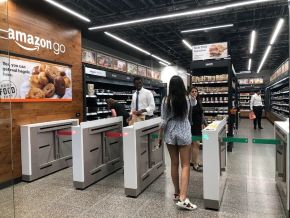
In the case of Amazon Go, for example, the company may have learned that the cashierless shopping experience isn't so easy to implement in all contexts. The technological and operational costs associated with implementing these types of solutions are very high, and sometimes people prefer the convenience of a traditional shopping experience or online shopping, which remains more economical and easier to manage.
Although these stores weren't a commercial success, Amazon remains a leader in the technology and e-commerce sector. Its ability to innovate and test new business models, even if some don't prosper, is a characteristic that has kept it at the forefront of the industry. Furthermore, it continues to be the benchmark in the world of cloud computing with AWS and in digital commerce with its online sales platform.
These kinds of failed attempts also reflect the reality of innovation: experimentation is key to evolving, but it doesn't always result in immediate success. By closing Amazon Go and Fresh, Amazon is simply adjusting its course, like all large companies that seek to find the perfect formula for the future.
Amazon's example shows that even tech giants can fail. This is a valuable lesson that all companies should keep in mind when considering investments in new technologies or business concepts. The important thing is not to fear failure, but to learn from mistakes and constantly improve. The closure of Amazon Go and Fresh is not a setback, but a natural part of the innovation process.
In short, Amazon moves forward, but this time with a clear lesson: innovation is a constant process of trial and error. And although not all experiments are successful, there is always something to learn. True success lies in how those lessons are leveraged for the future.
 EN
EN  ES
ES