
Views: 21
Robotics is undergoing one of the most profound transformations since its inception. Every year, smaller, faster, more precise robots with ever-increasing autonomy appear. And while there are many innovations, there is a key factor that explains this explosion of new applications: miniaturization.
Miniaturization means reducing the size of the mechanical, electronic, and structural parts that make up a robot. It may seem like a simple engineering exercise, but its effects are enormous. When a component is smaller, it weighs less, consumes less energy, and can move with greater agility. This opens the door to more versatile and efficient robots.
A lighter joint allows for faster movements. A smaller battery reduces the robot's overall weight. A miniaturized motor needs less energy to operate. All of this not only improves performance but also expands the environments where a robot can work.
One of the greatest advances of recent years is the arrival of robots designed to operate in extremely small spaces. From robots that inspect pipes, tanks, or internal industrial systems, to devices capable of exploring spaces where a human could not safely venture. These mini-robots can detect cracks, leaks, or structural flaws with millimeter precision.
But the most spectacular developments occur within the human body itself. Miniaturized surgical robots have become revolutionary tools. They allow for less invasive procedures, with much smaller incisions and a precision far superior to that of the human hand. Some prototypes even navigate through the bloodstream or internal body pathways, guided by medical images or magnetic fields.
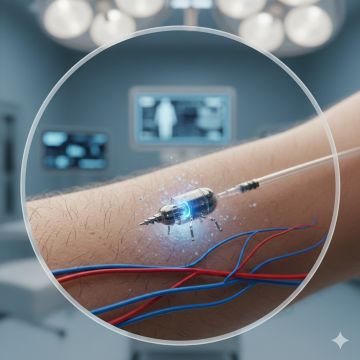
Micro-mechanics is driving the future. The trend toward miniaturization is not limited to medicine or industry. It affects ultra-compact drones, autonomous surveillance systems, rescue devices, and exploration robots for space missions. Reducing size means lower energy consumption, greater autonomy, and more design possibilities.
Micro-mechanics, supported by new manufacturing techniques such as high-precision 3D printing and ultralight materials, is enabling robots to become smarter, stronger, and more adaptable. Actuators the size of a grain of rice, microscopic sensors, and cameras as small as a seed already exist. All of this is pushing engineers' creativity into unimaginable territories.
The advance of miniaturization in robotics is only just beginning. With the arrival of new solid-state batteries, more powerful chips, and nanostructured materials, we will see even smaller and more efficient robots. The question is no longer whether they can do it, but how many different tasks they can adapt to.
From medical exploration to infrastructure inspection, scientific research, security, domestic assistance, and space exploration, miniaturization will be the key that unlocks new doors.
We are at an exciting stage. Robots are shrinking, but their impact continues to grow.
 EN
EN  ES
ES