
Views: 18
In the race to decarbonize industry, many sectors—cement, power generation, steel, paper—consume enormous amounts of energy and emit CO2 on a large scale. The possibility of capturing that CO2 directly at the point of emission, without needing to rethink all existing infrastructure, would be a game-changer.
And that's where Mantel comes in, a spin-out linked to the MIT environment, which proposes an in-situ capture system based on molten salts of boron, lithium, and sodium. According to their proposal, these salts can absorb CO2 and then release it through slight heating for reuse in other applications, such as carbonated beverages, among others.
The central idea is rhetorically simple: integrate the absorbent directly into the existing production flow, avoiding large investments in new infrastructure. This compatibility with existing production lines could reduce costs and implementation time, two critical factors for a capture technology to gain traction in the industry.
In laboratory tests, Mantel's salts have reportedly withstood more than 1,000 absorption cycles, suggesting good durability and operational viability. Furthermore, real interest has already been generated: a small-scale prototype system in a container has been operating for two years, and the company has signed an agreement with Kruger Inc., the Canadian paper giant, for a full-scale installation at one of its mills. This type of partnership is a valuable indication that the technology is moving from concept to practical implementation.
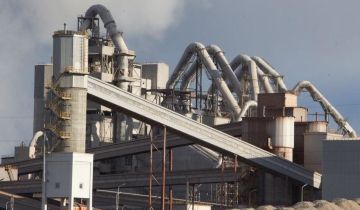
However, it is wise to maintain a balanced perspective. The path from laboratory tests and container demonstrators to large-scale implementation is narrow and fraught with numerous technical, economic, and regulatory challenges. Factors such as the energy required for salt regeneration, absorbent waste management, and material safety in industrial environments must be rigorously evaluated.
Although Mantel states that CO2 regeneration is viable through heating, the industrial scale, the variability of the processes (cement, paper, energy), and the life cycle economics must be analyzed in detail.
However, what does deserve recognition is the initiative and perseverance of a team that, despite historical skepticism, persists in proposing solutions for a cleaner environment.
The promise of capturing a large portion of the CO2 generated by industrial processes and, moreover, being able to reuse that CO2 in high-value applications could translate into economic and environmental benefits. If Kruger Inc. moves forward with the pilot installation, and especially if it extends it to other plants, it would open a real door for other companies to exploit the concept in different sectors around the world.
In an optimistic scenario, early success could catalyze investments and foster a broader CO2 capture ecosystem, integrating absorbent suppliers, equipment manufacturers, and end users. In the short term, the most valuable aspect is observing the maturity curve: pilot-scale tests, cost analyses, environmental impact assessments, and, of course, the operational results of the Kruger facility.
If everything falls into place, Mantel could transform a technological promise into a practical solution for industrial decarbonization, driving a cleaner environment for everyone.
Ultimately, the collective effort behind these initiatives is a stark reminder: innovation can emerge from unexpected places and, with the right collaboration, could bring us closer to a lower-CO2 future. The key lies in maintaining technical rigor, transparency in results, and a vision focused on real-world implementation.
The company's website can be found at: https://mantelcapture.com/
I wish them all the best, as we will all benefit from a cleaner environment.
 EN
EN  ES
ES