
Views: 24
While much of the world watches with fascination the advances in artificial intelligence, there's a discreet, silent device with over 70 years of history that remains fully relevant: the calculator. A simple device that many consider obsolete, yet it continues to sell millions of units every year.
The first electronic calculator appeared in 1957. Since then, it has evolved little in appearance, but much in reliability and efficiency. Far from disappearing, in 2024 more than 39 million calculators were sold in over 100 countries, with Casio as the leading global manufacturer. A figure that is surprising in the age of smartphones and AI.
The calculator's greatest strength is its constant availability and reliability. It runs on batteries that last for years, turns on instantly, doesn't need an internet connection, and doesn't depend on operating systems or updates. It simply works.
That's why it continues to be present in gas stations, shops, offices, banks, and small businesses. Many people who work with numbers prefer a physical calculator to a mobile one: it's faster, more visible, and avoids distractions.
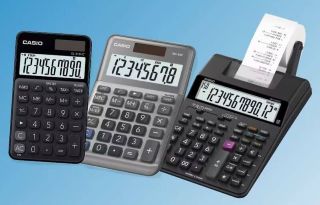
We live surrounded by complex devices: phones that need unlocking, apps that update, constant notifications, and batteries that drain quickly. A calculator is the complete opposite: a button, a number, and a result.
That simplicity is its greatest strength. It doesn't try to do more than necessary, and that's precisely why it remains useful. In a hyper-connected world, having a standalone, inexpensive, and robust tool is a real advantage.
In many developing countries, the calculator remains a basic tool for work and education. Its low cost and reliability make it ideal where access to smartphones or a constant electricity supply isn't guaranteed.
Even in the industrialized world, it's still more convenient to use a dedicated calculator than to open a mobile app for quick calculations.
Does it have an expiration date? It's hard to know how many more years it will be with us. But everything indicates that it has many more to come. As long as there's a need for immediate, reliable calculations without relying on other systems, the calculator will have its place.
It doesn't compete with artificial intelligence or mobile phones. It simply does what it's always done well. And sometimes, that's more than enough.
As with many simple yet well-designed technologies, its greatest strength is its unobtrusive nature… while remaining indispensable.
 EN
EN  ES
ES