
Views: 15
Generally, things don't happen by chance or luck; there are almost always reasons, some more significant than others, behind what happens to people, companies, etc. And if we see a company like Nvidia become the most valuable in the world in just a few years, it's for a reason.
I think Nvidia was relatively fortunate to start in 1993 with graphics processing units (GPUs) for games, a very active niche in the video game world, and one that general-purpose computers weren't capable of handling with the necessary computing speed.
This evolved, and in 2007, Forbes magazine declared it Company of the Year due to its positive development in the preceding years.
Along the way, it has acquired other companies to grow faster, but in my opinion, one of its greatest strengths is having developed CUDA (Compute Unified Device Architecture), which isn't a chip or hardware. It's a software platform and programming model created by NVIDIA in 2006.
Its function is simple to understand: It allows you to use the GPU as if it were a parallel supercomputer, and not just for graphics. This is the key difference.
Before CUDA, GPUs were used almost exclusively for rendering graphics, and programming them for other calculations was a technical nightmare.
With CUDA, a programmer writes code (C, C++, Python, etc.), and then CUDA translates it so that thousands of GPU cores can work simultaneously, with each core performing a small part of the work. The change is complete.
Let's take a simple example:
A computer with a CPU has 8–64 very powerful cores.
An NVIDIA GPU has thousands of simple cores working in parallel.
This is ideal for AI, because training models involves millions of repetitive mathematical operations. Exactly what a GPU does best
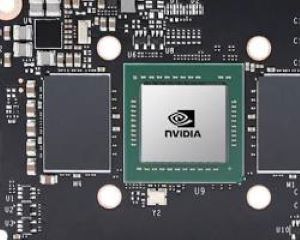
That's why CUDA is so important for AI. The key isn't just the hardware, but the whole package:
CUDA includes:
. Programming language
. Compilers
. Optimized math libraries
. Debugging tools
. Direct support for AI frameworks
In addition, NVIDIA has created critical libraries that are the de facto market standard:
. cuDNN → neural networks
. cuBLAS → linear algebra
. TensorRT → fast inference
. NCCL → GPU-to-GPU communication
Frameworks like:
. PyTorch
. TensorFlow
. JAX
Are written with CUDA first, and this means that:
. Everything works better and faster on NVIDIA GPUs
. New features arrive sooner
. Errors are corrected sooner.
Therefore, CUDA creates dependency (and that's its true power), and I think this is the key point that few people mention: CUDA has created a brutal "technological lock-in," and breaking free from it is very difficult. I apologize for the Anglicism.
What does this mean?:
. Millions of lines of code are written for CUDA.
. Thousands of researchers and engineers master it.
. Changing platforms is neither trivial nor cheap.
A company that has invested years in CUDA:
. Can't simply switch GPUs.
. Would have to rewrite code.
. Re-validate results.
. Lose performance and time.
When AI emerged, Nvidia was there, ready to be its best development platform and with the capacity to grow and supply the market.
And I think this is its strength: Nvidia doesn't sell chips; it sells a complete ecosystem. It's the world's leading company, offering the market products and continuous improvements with great speed.
That's why it's the most valuable company in the world.
 EN
EN  ES
ES