
Views: 10
The question may seem political, but the answer is purely strategic. Nvidia's CEO is interested in convincing any US administration—including a potential Trump presidency—that selling chips to China benefits their business and strengthens their global position. And when we talk about Nvidia, talking about business means talking about technological power.
It's true that Nvidia manufactures the most advanced chips for artificial intelligence. But that's not their true monopoly. Their greatest strength is called CUDA, which is a true monopoly today. Nvidia doesn't just sell chips; it sells dependency.
CUDA is a software platform and programming model created by Nvidia in 2006. Since then, it has become the de facto standard for programming high-performance applications, AI, and deep learning. Today, millions of developers worldwide program directly with CUDA in mind, not the hardware.
This means one very simple thing: whoever buys Nvidia chips gets trapped in its ecosystem. The more chips Nvidia sells to China, the more Chinese companies will depend on CUDA, its tools, its libraries, and its way of working. And getting out of that situation is neither quick nor cheap.
The real battle isn't technological; it's geopolitical. What's at stake between the United States and China isn't just who has better chips, but who controls the future of artificial intelligence. And that is power, in capital letters.
China is clear that it can't depend on American companies forever to develop its AI. That's why it's investing enormous resources in creating its own chips, even though they are currently less powerful than Nvidia's. The Chinese strategy is clear: independence first, performance later.
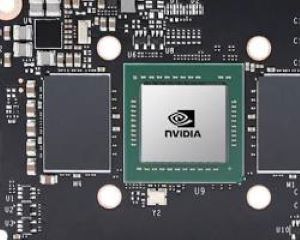
From the American perspective, this generates inevitable friction. It already happened with Huawei, which was expelled from the world of communications and the Android ecosystem, and suffered a major blow in the West. Even so, Huawei didn't disappear. It continued developing its own operating system, HarmonyOS, and maintains a strong position in China.
From Nvidia's perspective, completely blocking chip sales to China carries an obvious risk: accelerating Chinese technological independence.
If China cannot buy Nvidia chips, it will be forced to invest even faster in its own alternatives, both in hardware and software. And when that happens, Nvidia will not only lose sales but also long-term influence.
That's why Jensen Huang, Nvidia's CEO, insists that maintaining trade relations—even limited ones—is a way to keep China within the Nvidia ecosystem for as long as possible. And that's why he's asking Mr.Trump to allow them to sell chips to China.
This isn't about altruism or diplomacy. It's about pure business strategy. China thinks long-term, and so does Nvidia.
The Chinese government knows that technological independence isn't achieved in two years. It requires decades, massive investment, and tolerating inferior products initially. But once achieved, it's irreversible.
Nvidia knows this too. And that's why it's trying to buy time, retain Chinese developers, and maintain CUDA as the dominant language, even within China.
The final outcome is uncertain. China may never reach Nvidia's level. Or it may reach it and surpass it. The only certainty is that both are playing a very long game.
And in that game, selling chips today may be more important than banning them.
Time will tell who wins.
 EN
EN  ES
ES