
Views: 10
Ten years have passed since the world enthusiastically celebrated the Paris Agreement in 2015, that historic pact that promised to keep global warming below 1.5°C. A decade later, Brazil hosted COP30, and the reality is unsettling: we have already crossed that limit, which should have been a red line. And what is most worrying is that, despite scientific warnings and the extreme weather events we experience every year, we continue down the same path.
The UN climate summits, the well-known COPs, are built on an idea as laudable as it is complicated: getting almost 200 countries, with very different interests, to agree on a common plan to curb the climate crisis. On paper, it sounds reasonable. In practice, it's a nearly impossible puzzle.
There are countries whose economies depend on oil and don't want to give it up. Others, major emitters, have the capacity to transform their energy systems… but they are progressing far too slowly. And then there are the most vulnerable: poor nations that have barely contributed to the problem but suffer from floods, hurricanes, droughts, and rising sea levels.
The most affected countries are asking for something simple: financial aid to adapt to and survive the effects of climate change. But diplomatic promises are one thing, and reality is quite another: most of the aid either doesn't arrive, arrives late, or arrives in the form of loans, which increase the debt of countries already stretched to their limits.
This imbalance makes each COP all too similar to the last. Solemn speeches, declarations of intent… and a final text that serves as a stopgap measure, without clear or binding commitments. And Brazil has been no exception.
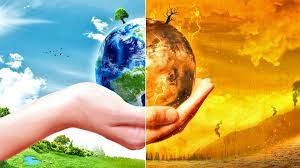
In this edition, it became clearer than ever that there are two irreconcilable blocs:
The countries that want to maintain the production and consumption of fossil fuels.
The countries that are calling for a real, rapid, and just transition.
The tension is so high that any meaningful agreement becomes almost impossible. And when there is no consensus, the result is an ambiguous final document, full of nuances, with verbs like "invite," "promote," or "explore," but without real decisions that will change the course of the planet.
Are these meetings useful? The question is uncomfortable, but necessary. The COPs were created to coordinate global efforts, but the world has changed faster than they have. Emissions continue to rise, temperatures are increasing, and extreme weather events are multiplying.
With so many conflicting interests, can such negotiations offer effective solutions? Every year it seems more evident that each country ends up doing what is most convenient for itself.
And yet, there is an important reality: the countries that are seriously committed to renewable energy, energy efficiency, and sustainable policies are doing so not only for ethical reasons, but also for strategic ones. The industry of the future will be clean, digital, and efficient. Those who do not adapt, or who take longer, will lose competitiveness.
The energy transition is already underway, with or without global agreements. Some countries are clearly taking steps forward : they're investing in batteries, hydrogen, electrification, regenerative agriculture, and sustainable mobility. Others continue to delay changes that will sooner or later be inevitable.
The risk is clear: in a few years, those who haven't done their homework will discover that their polluting industries will be more expensive, less efficient, and less attractive to international markets.
COP30 leaves us with a bitter taste: ten years after Paris, we have made progress, yes, but very little compared to the urgency of the problem. Global negotiations have become a diplomatic dance that reflects the interests of each country more than the needs of the planet.
The good news is that we still have time. The bad news is that we can no longer wait for everyone to agree. The future—economic, social, and environmental—is being shaped by each of us. And those who act today will be the leaders tomorrow.
 EN
EN  ES
ES